
 English
 Views: 0 Author: Site Editor Publish Time: 2026-07-21 Origin: Site


High-stress, corrosive environments demand components with zero margin for structural failure. Material selection and manufacturing methodology represent critical engineering decisions for any project. Engineers and procurement teams frequently weigh the upfront tooling costs of forging against the lower initial costs of casting or machining. However, failing to account for lifecycle fatigue, grain structure integrity, and material waste can lead to premature component failure and inflated long-term operational expenses. Understanding the technical realities of the stainless steel forging process enables teams to accurately evaluate suppliers, specify the correct alloy grades, and source components that meet stringent compliance and performance metrics. Proper execution ensures that parts withstand extreme pressures, resist aggressive chemical attacks, and maintain structural stability over decades of continuous field use.
Directional Strength: Forging aligns the internal grain structure of stainless steel with the shape of the part, delivering superior impact and fatigue resistance compared to casting or machining from bar stock.
Process Precision: Strict temperature controls during the stainless steel forging process are mandatory to prevent grain growth, surface cracking, and metallurgical degradation.
Grade Selection Matters: The choice between austenitic, duplex, and martensitic stainless steel forging dictates the balance between hardness, corrosion resistance, and thermal tolerance.
Supplier Evaluation: Sourcing custom stainless steel forgings requires vetting partners on their non-destructive testing (NDT) capabilities, heat treatment precision, and industry-specific certifications (e.g., ASTM, ASME).
Operational thresholds that necessitate forging include high pressure, extreme temperatures, and aggressive chemical environments. In these scenarios, structural integrity dictates system safety. Forging offers distinct metallurgical advantages over casting and machining. Plastic deformation refines the microstructure and eliminates internal voids or porosity, which are common defects in castings. Furthermore, forging avoids the grain-cutting weakness inherent to machining parts from solid bar stock. When you machine a component, you cut through the natural grain of the metal, creating potential failure points under high stress.
Continuous grain flow lines orient parallel to principal stress directions during the stainless steel forging operation. This alignment dramatically increases fatigue limits and impact toughness, ensuring the component withstands cyclic loading and sudden impacts. While the initial tooling investment for forging is higher, this cost offsets through reduced material waste, lower rejection rates, and an extended component lifespan. Field data consistently shows that forged valves, flanges, and fittings outlast their cast counterparts by significant margins in harsh industrial environments.
Manufacturing Method | Grain Structure | Porosity Risk | Material Waste | Best Application |
|---|---|---|---|---|
Forging | Continuous, aligned with part geometry | None | Low | High-stress, critical safety components |
Casting | Random, isotropic | High (internal voids common) | Low | Complex internal geometries, low stress |
Machining (Bar Stock) | Interrupted, cut grains | None | High | Low volume, simple geometries |
The process begins with the selection of raw stock. Operators conduct ultrasonic inspection on the bar stock to detect internal defects before any cutting occurs. The stock is then cut to precise volume weights using industrial band saws or shearing equipment. Maintaining narrow forging temperature windows prevents overheating, which causes grain coarsening, or underheating, which leads to cracking.
Because stainless steel has lower thermal conductivity than carbon steel, multi-stage preheating cycles are necessary. Operators typically preheat the billets to 800°C. After this stabilization phase, they rapidly heat the material to the final forging temperature of 1150°C–1250°C. This stepped approach prevents thermal shock and internal cracking, ensuring the billet is uniformly plasticized before it hits the dies.
The engineering phase for custom stainless steel forgings requires meticulous planning. Engineers calculate draft angles, shrinkage allowances, and material flow dynamics. Die materials, such as H13 hot-work tool steel, must withstand the high flow stress and abrasive nature of stainless alloys at elevated temperatures.
Designers choose between flash forging and flashless forging based on the part geometry and volume. Flash forging incorporates gutter systems to handle excess material, ensuring the die cavity fills completely. Flashless forging demands highly accurate billet volumes and is used for high-yield, near-net-shape components to minimize post-forge machining.
Facilities utilize several primary forging methods depending on the component requirements. Open-die forging works best for large, simple shapes like heavy shafts or blocks. Closed-die forging suits high-volume, complex geometries where tight tolerances are necessary. Seamless rolled ring forging produces high-strength circular components used in bearings and flanges.
Equipment choices vary based on the required deformation rate. Hydraulic presses provide slow, deep deformation ideal for heavy sections, ensuring the core of the material receives adequate work. Mechanical presses and drop hammers apply high strain rates for rapid surface deformation. The mechanical force applied achieves continuous grain flow and eliminates cast-structure segregation.
Post-forge cooling rates require strict control to prevent internal thermal stresses, distortion, and carbide precipitation. Sensitization is a major concern for specific alloys. Slow cooling of austenitic grades through the critical range of 425°C–870°C causes chromium carbide precipitation at grain boundaries. This depletes the surrounding areas of chromium, leading to severe intergranular corrosion in service.
Necessary heat treatments restore corrosion resistance and mechanical properties. Facilities perform solution annealing and rapid quenching for austenitic grades. They utilize quenching and tempering cycles for martensitic grades to achieve the desired hardness. Ferritic alloys typically undergo normalization to refine the grain structure and relieve residual stresses.
Transitioning from near-net shape to final tolerances requires precision CNC machining. Machining work-hardening stainless steels presents specific challenges. Operators must use rigid setups, sharp carbide tooling, and appropriate feed rates to prevent the material from hardening ahead of the cut.
Descaling methods, such as mechanical blasting with stainless steel media or chemical pickling in nitric-hydrofluoric acid baths, remove the tenacious oxide scale formed during hot forging. Finally, passivation according to ASTM A967 restores the chromium-rich passive layer. This chemical treatment removes free iron from the surface, ensuring optimal corrosion resistance in the field.
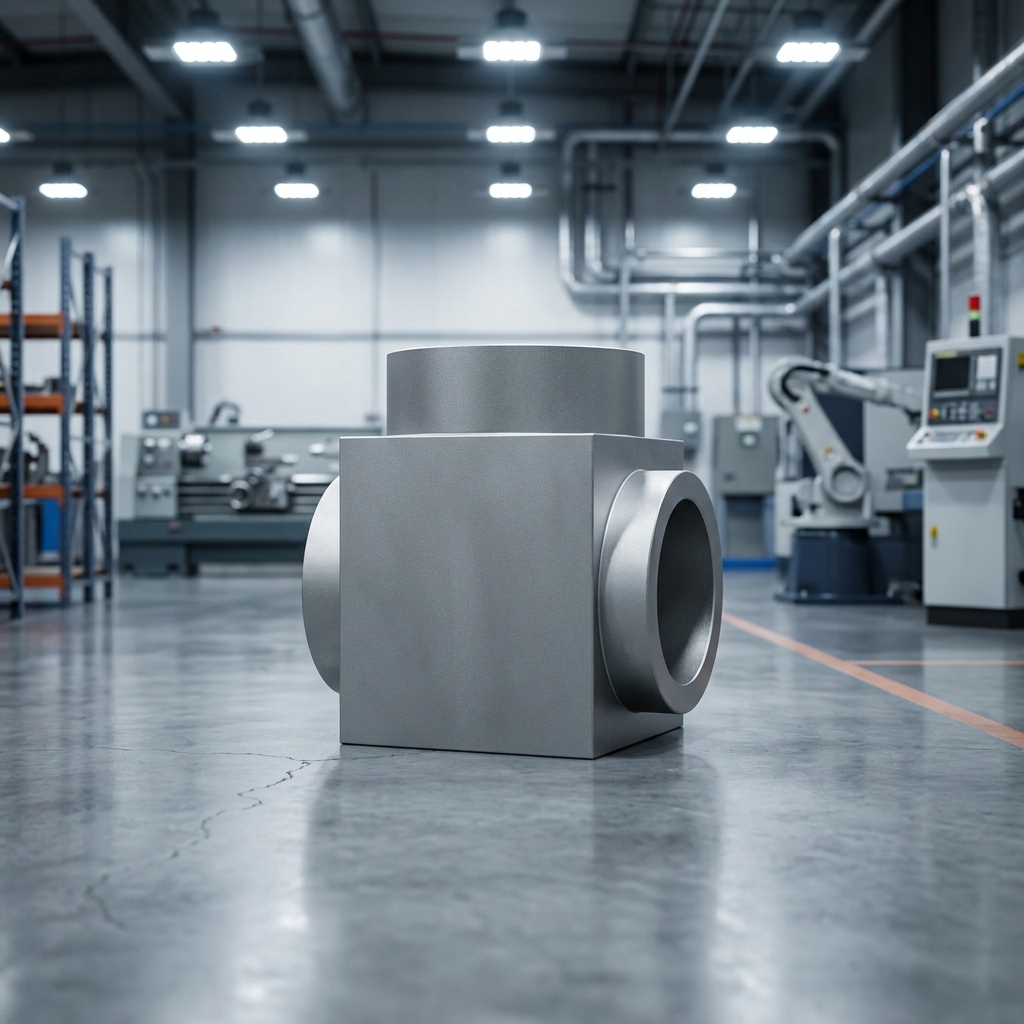
Engineers specify grades like 304/304L and 316/316L for use cases requiring maximum corrosion resistance and non-magnetic properties. Typical applications include food processing equipment, marine hardware, and pharmaceutical manufacturing systems. The addition of molybdenum in 316 provides superior resistance to chloride pitting.
The use of low-carbon "L" grades (where carbon is restricted to 0.03% maximum) is standard practice to mitigate sensitization during the forging and subsequent welding processes. This ensures the components maintain their corrosion resistance even after exposure to elevated temperatures during fabrication.
Evaluation criteria for martensitic stainless steel forging involve grades like 410, 420, and 440C. The higher carbon content allows for hardening via heat treatment, offering superior wear resistance and tensile strength. These grades are heavily utilized in pump shafts, valve internals, and cutlery.
However, this strength comes with lower corrosion resistance compared to austenitic grades. Controlling delta ferrite phase formation during high-temperature forging is essential. Excessive delta ferrite can significantly reduce transverse ductility, leading to premature failure under mechanical load.
Grades like 2205 and 2507 are specified for environments requiring high yield strength and exceptional resistance to stress corrosion cracking. Offshore oil and gas platforms, chemical processing plants, and desalination facilities rely heavily on these alloys. They offer roughly twice the yield strength of standard austenitic grades.
Forging duplex steels is challenging because they possess a dual-phase (austenite and ferrite) microstructure. Strict deformation temperature controls are required to avoid intermetallic phase precipitation. If the material cools too slowly or is forged at the wrong temperature, brittle sigma phase forms, drastically reducing both toughness and corrosion resistance.
The specification of F92 forged steel parts for the pressure valves is critical for extreme high-temperature environments. This creep-resistant alloy (9Cr-2W-V-Nb-B) is mandatory in ultra-supercritical power plants and high-pressure steam applications where standard stainless steels would deform over time.
Strict post-weld and post-forge heat treatment (PWHT) normalization and tempering cycles are required to prevent premature creep-rupture failure. The precise addition of tungsten, vanadium, and niobium creates a stable microstructure that maintains its mechanical integrity at temperatures exceeding 600°C.
Alloy Family | Common Grades | Key Characteristics | Primary Applications |
|---|---|---|---|
Austenitic | 304L, 316L | High corrosion resistance, non-magnetic, excellent ductility | Marine, chemical processing, food grade |
Martensitic | 410, 420, 440C | High hardness, wear resistance, heat treatable | Valve seats, pump shafts, turbine blades |
Duplex | 2205, 2507 | High yield strength, stress corrosion cracking resistance | Offshore oil & gas, desalination |
Specialty Creep-Resistant | F92 | Extreme high-temperature strength, creep resistance | Ultra-supercritical power generation |
Vetting suppliers requires a rigorous audit of their quality management systems. Look for ISO 9001 as a baseline. Aerospace applications demand AS9100 certification. Pressure equipment requires compliance with PED 2014/68/EU, while oil and gas applications often mandate NORSOK M-650 approval.
Full material traceability is non-negotiable for critical components. Suppliers must provide EN 10204 3.1 or 3.2 Mill Test Reports (MTRs) to verify the exact chemical composition and mechanical properties of the heat lot used for your forgings. Without this documentation, the parts cannot be legally installed in regulated environments.
Mandatory testing protocols ensure the internal and external integrity of critical forgings. Facilities perform Ultrasonic Testing (UT) per ASTM A388 to detect internal flaws, voids, or inclusions. Surface defects are detected using Liquid Penetrant Inspection (LPI) per ASTM E165 for non-magnetic grades, or Magnetic Particle Inspection (MPI) for martensitic and ferritic grades.
Destructive testing metrics validate the heat treatment process. Suppliers should provide data from tensile testing, Charpy V-notch impact testing at specified temperatures, and grain size analysis according to ASTM E112. These tests confirm the material meets the mechanical requirements of the engineering specification.
Evaluate minimum order quantities (MOQs) against die amortization to determine cost-effectiveness. High tooling costs for closed-die forging make small runs expensive. Discuss tooling ownership and maintenance agreements upfront.
Assess a supplier's capacity to scale production. A capable partner can transition a project from prototype open-die forgings to high-volume closed-die production seamlessly. This ensures continuity of supply as project demands increase and prevents the need to qualify a new vendor mid-production.
Common forging risks include surface laps, internal ruptures, underfilling of the die cavity, and detrimental delta ferrite formation. These defects compromise the structural integrity of the final part and often lead to rejection during NDT.
To mitigate these risks, specify suppliers equipped with automated temperature monitoring and finite element analysis (FEA) metal flow simulation software. FEA allows engineers to model the forging process virtually, optimizing die design and billet volume before cutting any steel. Strict adherence to ASTM A473 (Standard Specification for Stainless Steel Forgings) establishes baseline quality requirements.
Insufficient machining allowance leads to uncleaned forged surfaces on finished parts, resulting in scrap. Conversely, excessive allowance wastes expensive material and increases CNC machining time.
Collaborative CAD/CAM review and 3D modeling between the OEM and the forging facility prior to die creation are necessary. This collaboration defines optimized machining envelopes, ensuring enough material exists to clean up all surfaces while minimizing unnecessary stock removal.
Raw material surcharges for alloying elements like nickel, chromium, and molybdenum heavily impact pricing. Stainless steel markets experience significant volatility based on global mining outputs and geopolitical factors.
Mitigate supply chain volatility by establishing blanket orders and safety stock agreements with your forging partner. Dual-sourcing strategies for mission-critical custom forgings prevent production line shutdowns if one supplier experiences equipment failure or raw material shortages.
Stainless steel forging stands as the definitive manufacturing choice when component failure carries unacceptable safety or financial risks. The process delivers unmatched mechanical properties, aligning grain structures to handle extreme operational stresses. Base your supplier selection on proven metallurgical expertise with specific grades, robust in-house heat treatment, comprehensive NDT capabilities, and the ability to engineer cost-effective tooling.
Audit your current cast or machined components to identify parts experiencing high failure rates that are candidates for forging conversion.
Compile your 3D CAD files, material specifications, and annual volume requirements into a comprehensive RFQ package.
Request a technical manufacturability review from a certified forging supplier to optimize part geometry for the closed-die process.
Establish clear NDT and certification requirements upfront to ensure compliance with industry standards.
A: Forging refines the internal grain structure and aligns it with the part's geometry. This plastic deformation eliminates internal voids and porosity, significantly increasing fatigue resistance, yield strength, and impact toughness compared to cast alternatives.
A: Hot forging occurs above the recrystallization temperature, allowing for extensive deformation of complex shapes without cracking. Cold forging occurs at room temperature, increasing strength through work hardening but requiring massively higher press forces and limiting geometric complexity.
A: Suppliers prevent sensitization by rapidly quenching the forged parts through the critical temperature range of 425°C to 870°C. They also utilize low-carbon "L" grades to minimize the carbon available for chromium carbide precipitation.
A: Specify martensitic grades when the application demands high hardness, superior wear resistance, and high tensile strength, provided that moderate corrosion resistance is acceptable for the operating environment.
A: F92 is preferred because its specific alloy composition provides exceptional creep resistance and high-temperature strength. These properties are critical for maintaining structural integrity in ultra-supercritical power plants operating at extreme temperatures.
A: Critical forgings require Ultrasonic Testing (UT) to detect internal flaws and Liquid Penetrant Inspection (LPI) or Magnetic Particle Inspection (MPI) to identify surface defects before machining begins.


