
 English
 Views: 0 Author: Site Editor Publish Time: 2026-07-07 Origin: Site


Material failure in high-pressure, corrosive, or extreme-temperature environments carries catastrophic financial and safety risks. Procuring critical components becomes a high-stakes engineering decision. Buyers and metallurgical engineers struggle to balance stringent mechanical requirements—such as fatigue life, corrosion resistance, and microstructural integrity—with commercial procurement realities. You have to manage tooling amortization, minimum order quantities, and volatile lead times. Sourcing metal components demands a rigorous approach to material science and manufacturing capabilities.
This guide provides an evidence-based framework for evaluating the stainless steel forging process. We compare alloy properties, mitigate supply chain risks, and vet manufacturing partners for custom and high-stress applications.
Superior Structural Integrity: The forging process aligns the metal’s directional grain flow to the component's geometry, offering significantly higher impact strength and fatigue resistance compared to casting or machining from bar stock.
Alloy Selection Dictates Performance: The specific properties of stainless steel forgings vary drastically across austenitic, martensitic, ferritic, duplex, and precipitation-hardening grades; selection must be strictly mapped to environmental, chemical, and thermal operating conditions.
Custom Tooling Requires Volume Justification: Custom stainless steel forgings require upfront die design and tooling investments, making closed-die methods most cost-effective for medium-to-high volume production runs, while open-die or forged bar machining suits low-volume or prototype needs.
Post-Forging Surface Restorations are Critical: Forging alters the surface chemistry of stainless steel; proper heat treatment, pickling, and passivation (ASTM A967) are mandatory to restore corrosion resistance.
Traceability is Non-Negotiable: For high-stakes components like F91 power station valve forgings, rigorous Non-Destructive Testing (NDT), Positive Material Identification (PMI), and strict adherence to ASTM/ASME standards are mandatory evaluation criteria for any qualified supplier.
Engineers face a constant choice between forging, casting, and machining. The primary metallurgical advantage of forging lies in continuous directional grain flow. Castings present a porous, isotropic structure prone to internal inconsistencies. Machined billet interrupts the natural grain lines. Forging compresses and aligns the grain structure to follow the exact geometry of the part. This alignment drastically improves fatigue resistance and impact strength under heavy cyclic loading.
The extreme pressure applied during the forging process heals internal voids, gas pockets, and centerline segregation that frequently plague cast materials. Eliminating these microscopic defects prevents premature crack initiation in high-stress applications. Near-net-shape forging optimizes the buy-to-fly ratio. By forming the metal closely to its final dimensions, manufacturers minimize material waste. You reduce scrap generation and significantly cut down on expensive machining cycle times compared to purely subtractive manufacturing methods.
Navigating the regulatory and specification framework requires attention to detail. ASTM A473 serves as the standard specification for general stainless steel forgings. It covers a broad range of grades and basic mechanical requirements. ASTM A182 imposes much stricter controls. It specifically governs forged or rolled alloy and stainless steel pipe flanges, forged fittings, and valves intended for high-temperature service. Compliance with the correct standard ensures the material will perform safely in its intended environment.
Defining success criteria requires establishing strict baseline mechanical metrics. Procurement specifications must clearly dictate acceptable minimums for yield strength, tensile strength, elongation, and Charpy V-notch impact toughness. Testing for resistance to intergranular corrosion ensures the material withstands aggressive chemical environments without degrading at the microstructural level. Evaluating upfront tooling costs, machining overhead, and NDT requirements against the lifecycle performance of the component provides a clear picture of the investment value over casting alternatives.
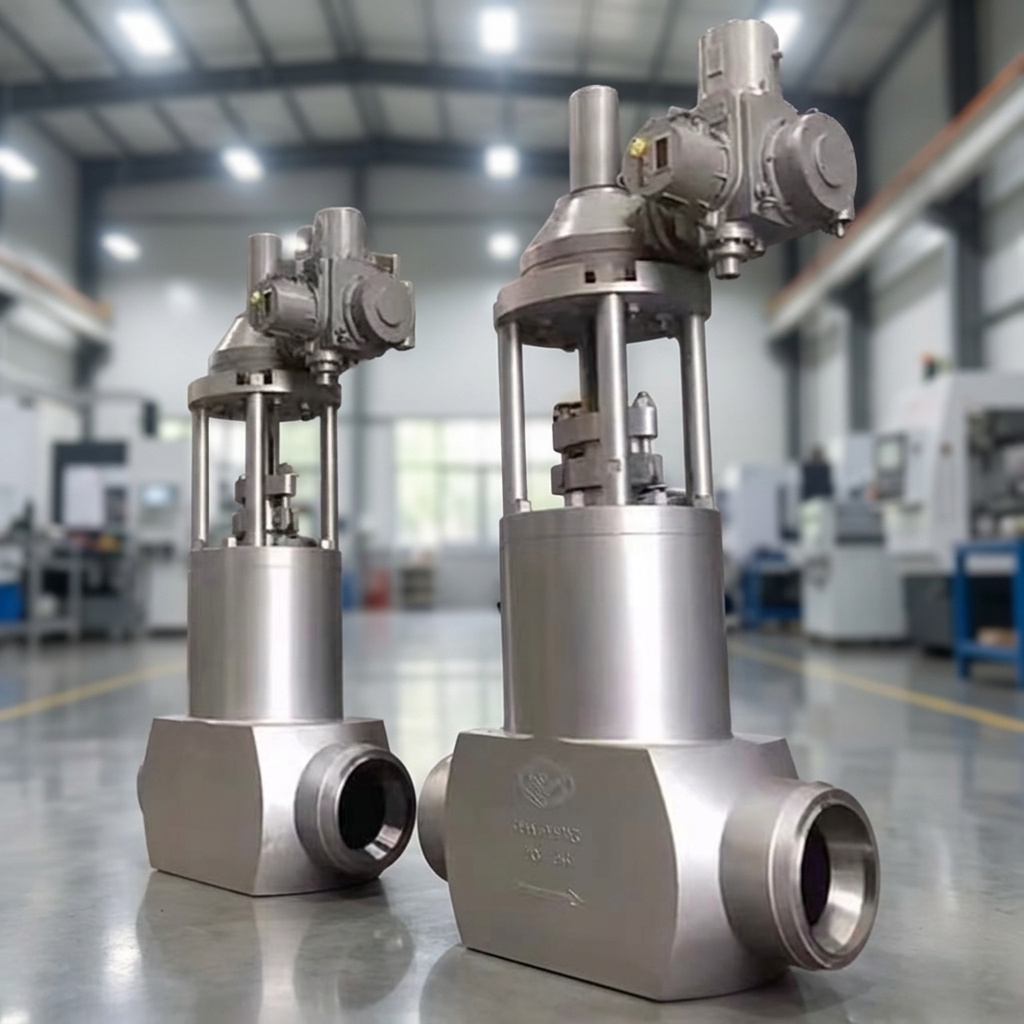
Working with stainless alloys requires specialized equipment and deep metallurgical expertise. Stainless steel exhibits high elevated-temperature strength. It resists deformation much more stubbornly than carbon or low-alloy steels. Facilities must utilize presses with up to 50% more tonnage to achieve the necessary flow stress. This high deformation resistance places immense strain on both the machinery and the tooling.
Temperature control dictates the success or failure of the forging cycle. Stainless grades operate within narrow forging temperature windows. If the metal is worked too hot, it becomes susceptible to hot shortness. This leads to catastrophic cracking along the grain boundaries. Allowing the material to cool into low ductility zones before the forging cycle is complete risks severe structural fractures. Delayed transfer from the heating furnace to the die directly compromises the integrity of the final component.
Die wear presents another significant manufacturing challenge. Chromium oxide scales naturally form on stainless steel at high temperatures. These scales are highly abrasive. Repeated pressing grinds these scales into the die cavities. Manufacturers must invest in high-durability die materials, such as AISI H13 hot-work tool steel. They apply advanced glass-based lubricants that withstand extreme temperatures and friction while protecting the die geometry.
Defect Type | Root Cause | Prevention Strategy |
|---|---|---|
Hot Shortness | Forging temperature too high, melting grain boundaries. | Strict pyrometer monitoring and furnace calibration. |
Cold Shuts | Metal folding over itself without welding during deformation. | Optimize die radii and ensure proper billet volume. |
Thermal Cracking | Cooling too rapidly post-forging (especially martensitic grades). | Controlled cooling in ash or specialized cooling furnaces. |
Understanding the properties of stainless steel forgings requires analyzing the specific microstructural categories. Each alloy family responds differently to heat, pressure, and environmental exposure.
Austenitic alloys deliver superior general corrosion resistance, exceptional cryogenic toughness, and excellent formability. They are highly susceptible to sensitization. This is the precipitation of chromium carbides at grain boundaries if cooled too slowly through the 425°C to 815°C range. Engineers specify low-carbon "L" grades or stabilized variations containing Titanium (321) or Niobium (347). Mandatory solution annealing post-forging dissolves any formed carbides and restores full corrosion resistance.
These grades are selected for applications demanding exceptionally high hardness, yield strength, and wear resistance. These properties are achieved through precise hardening and tempering cycles. Martensitic stainless steels exhibit high crack sensitivity during the cooling phase. They require controlled, slow-cooling cycles immediately post-forging. Parts are often buried in ashes or placed in specialized cooling furnaces to prevent severe thermal stress cracking.
Ferritic alloys offer moderate corrosion resistance, high resistance to stress corrosion cracking, and a lower price point due to the absence of nickel. The primary forging challenge is rapid grain growth at elevated temperatures. This severely degrades room-temperature toughness. Manufacturers must enforce strict temperature limitations during heating and implement rapid cooling techniques post-forging to maintain a fine grain structure.
Duplex grades feature a dual-phase microstructure consisting of approximately 50% ferrite and 50% austenite. This structure yields double the strength of standard austenitic grades alongside outstanding resistance to localized chloride pitting, crevice corrosion, and stress corrosion cracking. Duplex alloys possess the narrowest hot-working temperature window. Improper heating or slow cooling triggers the precipitation of brittle intermetallic phases, such as sigma phase between 600°C and 1000°C. This drastically reduces both toughness and corrosion resistance.
PH grades combine high tensile strength, excellent fracture toughness, and moderate corrosion resistance. They are typically forged in the solution-annealed state and subsequently subjected to precise aging treatments to hit exact mechanical targets. Strict control over the delta ferrite content is necessary during processing to prevent the development of anisotropic properties that could weaken the component under directional stress.
Flow control systems in extreme environments rely heavily on the structural density provided by forging. Standard industrial applications in chemical processing, oil and gas extraction, and marine environments demand robust high-pressure gate, globe, ball, and check valves. Stainless steel valve forgings outperform cast alternatives by resisting the microscopic fatigue that leads to failure under severe cyclic loading and sudden thermal shock.
Cryogenic applications, such as LNG terminals and aerospace fuel systems operating at temperatures down to -196°C, require specific material processing. Grades like 316 and 316L are selected and processed to maintain a fully austenitic structure. This prevents any brittle martensitic transformation from occurring when the metal is subjected to deformation at ultra-low temperatures. The valve body retains its impact toughness.
Power generation facilities present some of the most aggressive operating environments. F91 power station valve forgings utilize ASTM A182 Grade F91, a Creep-Strength Enhanced Ferritic steel. Ultra-supercritical steam systems operate at temperatures exceeding 600°C and pressures above 250 bar. Under these conditions, creep-rupture strength, oxidation resistance, and long-term structural stability are critical to preventing catastrophic blowouts.
A primary failure mode in these plants is Type IV cracking within the heat-affected zones. Precise forging techniques and rigorous thermal processing mitigate this danger. F91 requires rigid normalizing cycles between 1040°C and 1080°C, followed by tempering at 730°C to 780°C. Strict control over cooling rates and mandatory hardness testing are necessary to stabilize the complex tempered martensite microstructure.
Procuring custom stainless steel forgings requires a collaborative approach to Design for Forgability. Proper part design ensures manufacturability and extends die life. Engineers must establish standard internal draft angles (7° to 10°) and external draft angles (5° to 7°) to guarantee clean release from the die cavity. Specifying minimum corner and fillet radii prevents the formation of folds, cold shuts, and rapid die degradation. Strategic placement of the parting line optimizes the directional grain flow along the component's most critical stress axes.
Selecting the optimal forging method depends entirely on volume, geometry, and budget constraints. Open-die forging shapes metal between flat dies without completely enclosing the material. It is ideal for large-scale, low-volume, or geometrically simple components like heavy shafts, sleeves, and forged bars. It requires low upfront tooling investment but necessitates a high machining allowance.
Closed-die forging compresses the metal into a fully enclosed custom impression. It is suited for complex, high-volume, near-net-shape parts such as custom valve bodies and specialized flanges. Despite high upfront tooling costs, it offers minimal material waste and exceptional dimensional repeatability. Seamless rolled ring forging is the standard for large hollow, circular components including valve rings, pressure vessel flanges, and gear blanks. This method provides superior tangential grain orientation for radial strength.
Managing the lifecycle economics of custom tooling is a critical procurement function. Buyers must structure clear tooling amortization schedules for custom projects. You balance the initial die creation costs against the projected production volume. Evaluating the die materials and specific heat treatments applied to the tooling itself helps maximize die life under the aggressive, high-friction cycles inherent to stainless steel processing.
The forging process leaves internal stresses and alters the surface chemistry of the metal. Post-forging thermal and chemical treatments are mandatory to achieve the final specified properties. Heat treatments vary by alloy family. Solution annealing dissolves carbides in austenitic grades, restoring vital corrosion resistance. Quenching and tempering allow martensitic grades to achieve their targeted yield strength and hardness profiles. Precipitation hardening forces the precipitation of intermetallic compounds that strengthen the matrix of PH grades.
Surface restorations are equally critical. High-temperature forging generates heavy oxide scales that must be removed via aggressive descaling or shot blasting. Following mechanical removal, acid pickling chemically strips away the chromium-depleted layer that forms directly beneath the high-temperature scale. Passivation according to ASTM A967 utilizes nitric or citric acid baths to strip free iron from the surface. This facilitates the rapid formation of a continuous, protective chromium oxide passive layer.
Verifying the integrity of forged components requires a multi-tiered testing protocol. Non-Destructive Testing methods, including ultrasonic testing and magnetic particle inspection, detect internal voids and surface micro-fissures without damaging the part. Positive Material Identification using X-ray fluorescence guarantees the exact chemical composition of the alloy matches the procurement specification.
Testing Method | Primary Purpose | Application Phase |
|---|---|---|
Ultrasonic Testing (UT) | Detect deep internal flaws, voids, and inclusions. | Post-forging / Post-heat treatment |
Dye Penetrant (DPI) | Identify surface-breaking cracks and porosity. | Final surface inspection |
Positive Material Identification (PMI) | Verify exact alloy chemical composition. | Receiving / Final QA |
Charpy V-Notch | Measure impact toughness and ductility. | Destructive batch testing |
Mechanical testing on sacrificial prolongations or batch samples confirms yield strength, tensile strength, and hardness. Strict documentation, including detailed Material Test Reports tracing the component back to the original melt, provides the necessary assurance for high-stakes industrial applications.
Audit your current component failure rates to determine if upgrading from cast to forged stainless steel will resolve recurring fatigue or pressure-related issues.
Map your precise operating environment directly to the appropriate stainless steel grade before finalizing prints.
Collaborate with your forging partner during the early design phase to optimize draft angles, radii, and parting lines.
Demand comprehensive Material Test Reports and specify mandatory NDT protocols for all critical load-bearing components.
A: Stainless steel retains high strength at elevated temperatures and has greater deformation resistance. It requires significantly higher press tonnage and stricter temperature controls to flow properly without cracking compared to standard carbon steels.
A: Open-die forging shapes metal between flat dies without completely enclosing the material, ideal for large, low-volume parts. Closed-die forging compresses the metal into a fully enclosed custom impression, perfect for complex, high-volume, near-net-shape components.
A: The heat of forging can cause chromium carbides to precipitate at the grain boundaries, a process called sensitization. Solution annealing dissolves these carbides back into the matrix, fully restoring the material's corrosion resistance.
A: Yes. The extreme compressive forces of forging consolidate the metal, closing internal voids, gas pockets, and porosity that are common in castings, resulting in a much denser and structurally reliable component.
A: Passivation uses acid treatments to remove free iron and contaminants from the surface of the machined or forged part. This accelerates the formation of a thin, continuous chromium oxide layer that protects the steel from environmental corrosion.
A: Forging aligns the internal grain structure of the metal to follow the exact contours of the component. This continuous directional grain flow provides superior resistance to impact and fatigue compared to the random grain structure of castings.


