
 English
 Views: 0 Author: Site Editor Publish Time: 2026-07-14 Origin: Site


Catastrophic component failure in high-pressure, corrosive, or extreme-temperature industrial environments carries compounding financial and safety costs. Engineering and procurement teams consistently struggle to balance upfront manufacturing investments against the long-term structural integrity required for mission-critical parts. When a valve body cracks under pressure or a flange corrodes prematurely, the resulting downtime and environmental hazards far outweigh any initial savings on fabrication. While casting and machining from billet offer lower barriers to entry and faster initial turnaround times, transitioning to stainless steel forging provides unmatched metallurgical advantages. This manufacturing approach effectively mitigates failure risks and optimizes lifecycle reliability for severe-service applications. By manipulating the internal grain structure through extreme mechanical pressure, engineers can produce components that withstand aggressive chemical media, heavy cyclic loading, and extreme thermal gradients without compromising safety or performance.
Superior Structural Integrity: The forging process aligns the internal grain structure of stainless steel to the component's shape, drastically improving fatigue resistance, impact strength, and burst pressure compared to cast alternatives.
Material Optimization: Selecting the correct stainless steel forging material (austenitic, martensitic, or duplex) allows engineers to precisely match mechanical properties and corrosion resistance to specific environmental threats.
Lifecycle Cost Efficiency: Despite higher initial tooling investments, custom stainless steel forgings reduce material waste, lower machining times, and extend component lifespans, delivering a superior ROI at scale.
Regulatory Compliance: For critical infrastructure, such as stainless steel forgings for pressure vessels, the traceable, defect-free nature of forged components is essential for meeting strict ASME and ASTM safety standards.
Cast stainless steel components carry inherent risks of gas entrapment, shrinkage cavities, and non-metallic inclusions. When molten metal cools and solidifies within a mold, it naturally contracts. This contraction often leaves microscopic voids and porosity throughout the internal structure of the part. In high-stress applications, these internal voids act as stress concentrators. When subjected to heavy loads or pressure spikes, cracks initiate at these weak points and propagate rapidly through the material. Furthermore, slow cooling rates during the casting process often lead to chromium carbide precipitation at the grain boundaries. This precipitation depletes the surrounding areas of chromium, accelerating localized intergranular corrosion when the part is exposed to aggressive chemicals.
Machining parts directly from solid bar stock presents entirely different structural challenges. While billet material is generally free of the porosity found in castings, subtractive machining interrupts the natural unidirectional grain flow of the metal. Cutting through these grain lines to create complex geometries creates structural notches. These exposed, severed grain boundaries become highly vulnerable to failure under cyclic loading and shear stress. When a machined component faces continuous vibration or pressure cycling, the interrupted grain structure provides a path of least resistance for fatigue cracks to develop and spread.
Severe-service parts demand strict baseline mechanical requirements that standard castings simply cannot meet reliably. Components operating in petrochemical plants, offshore platforms, or power generation facilities must exhibit high yield strength, ultimate tensile strength, fracture toughness, and ductility. Engineers must establish clear environmental thresholds that dictate performance limits across various applications. Parts must maintain structural integrity under cryogenic temperatures and extreme thermal cycling without becoming brittle. They must resist degradation from aggressive chemical media, sour gas, and high-saline marine exposure. Meeting these criteria requires manufacturing processes capable of fundamentally altering and improving the internal metal structure, rather than just shaping its exterior.
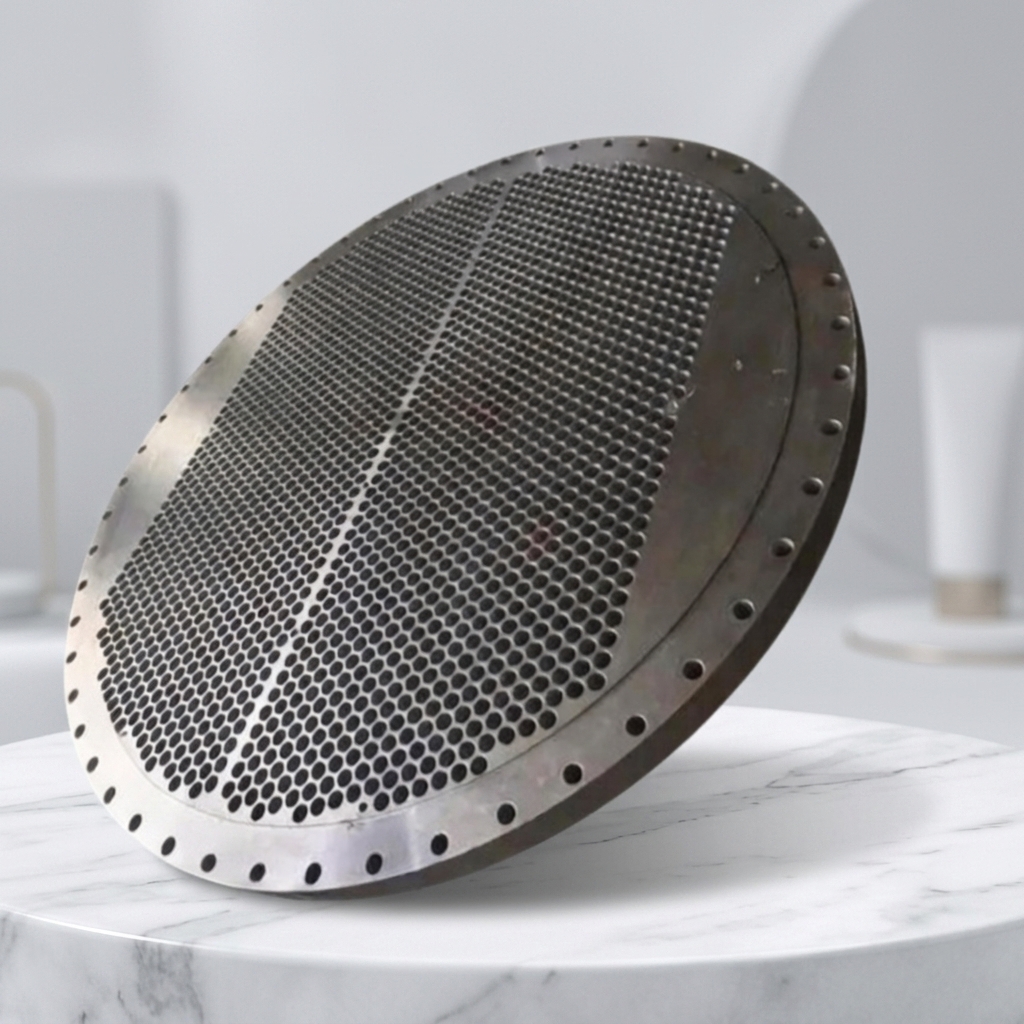
High-pressure mechanical deformation fundamentally refines the crystalline dendritic structure of a cast ingot. When a stainless steel billet is heated to its plastic state and subjected to immense compressive forces, the coarse grains break down into a finer, more uniform structure. The forging process manipulates these grain flow lines to run parallel to the critical geometry of the part. This continuous grain flow acts much like the grain in a piece of wood, maximizing resistance to fatigue, impact, and shear stresses along the specific axes where the component will experience the highest loads in the field.
Beyond grain alignment, high-pressure hot working effectively consolidates internal defects. The extreme compressive forces physically weld shut internal micro-voids, porosity, and gas pockets that may have been present in the original raw material. The resulting internal soundness guarantees predictable mechanical performance under extreme operational loads. When a forged part undergoes hydrostatic testing, the absence of internal voids ensures it can handle pressure spikes that would cause a cast equivalent to rupture or leak.
Forged components achieve superior mechanical strength with reduced wall thicknesses compared to castings. Because the material is denser and structurally optimized, engineers can design parts with thinner cross-sections without sacrificing safety margins. This optimized strength-to-weight ratio saves overall weight and reduces raw material usage, which is particularly beneficial in offshore and aerospace applications where every pound matters.
The forging process delivers measurable increases in several key mechanical metrics:
Charpy V-notch impact energy absorption increases, allowing the part to withstand sudden physical shocks without fracturing.
Elongation and reduction of area metrics improve significantly, indicating higher ductility.
Yield strength becomes more uniform across the entire cross-section of the component.
Fatigue limits are extended, allowing the part to survive millions of additional operational cycles.
The homogeneous metallurgical structure of forged stainless steel ensures uniform distribution of alloying elements like chromium, nickel, and molybdenum. In cast parts, these elements can segregate during cooling, leaving certain areas vulnerable to chemical attack. The uniformity achieved through forging preserves the passive chromium oxide layer across the entire component surface. A stable, unbroken passive layer prevents localized breakdown, pitting corrosion, and crevice corrosion in harsh environments.
Forged components also demonstrate exceptional thermal stability. They retain their mechanical performance across extreme temperature gradients, from cryogenic fluid handling to high-heat exhaust systems. This stability mitigates sensitization and thermal fatigue during operational cycling, ensuring the part does not warp, crack, or lose its corrosion resistance after repeated heating and cooling phases.
Grades like 304/304L and 316/316L serve as highly versatile options across multiple industries. Choosing the right stainless steel forging material ensures maximum corrosion resistance and cryogenic stability. Austenitic grades are heavily alloyed with chromium and nickel, providing excellent protection against a wide range of corrosive media. Low-carbon variants (the "L" grades) are specifically selected to prevent chromium carbide precipitation during the hot forging process. By keeping carbon levels below 0.03%, engineers prevent sensitization and maintain the material's corrosion resistance even after exposure to high forging temperatures.
However, austenitic grades feature lower yield strength compared to martensitic or duplex alloys. They cannot be hardened by heat treatment, relying instead on cold working to increase strength. They also maintain non-magnetic properties, which benefits specific instrumentation and medical applications where magnetic interference must be avoided.
Applications requiring high hardness, tensile strength, and wear resistance rely on martensitic grades like 410 and 420. Specifying a forged F420 stainless steel flange for heat exchanger systems balances high mechanical strength with thermal conductivity. These alloys provide moderate corrosion resistance, making them suitable for thermal transfer environments where extreme chemical exposure is not the primary concern, but mechanical wear and pressure are significant factors.
Post-forge heat treatment remains an absolute requirement for martensitic alloys. Strict quenching and tempering cycles are necessary to achieve targeted Rockwell C hardness values and relieve internal stresses generated during forging. Proper heat treatment also mitigates the risk of hydrogen embrittlement, ensuring the flange or valve component remains tough and durable in the field.
Duplex alloys feature a highly engineered dual-phase microstructure. This roughly 50/50 austenitic-ferritic structure offers superior yield strength—often double that of standard 300-series austenitic grades. More importantly, it provides exceptional resistance to stress-corrosion cracking (SCC) in chloride-rich environments, making it the go-to choice for offshore oil rigs and desalination plants.
Forging duplex alloys requires tight temperature controls on the shop floor. Hot working typically occurs within a narrow window between 1150°C and 1280°C. Maintaining these process windows is critical to prevent the formation of brittle intermetallic phases, such as the sigma phase, which can drastically reduce the material's toughness and corrosion resistance. Operators must move quickly and monitor temperatures constantly to ensure the duplex material retains its intended properties.
Alloy Family | Common Grades | Key Strengths | Typical Applications |
|---|---|---|---|
Austenitic | 304L, 316L, 316Ti | Excellent corrosion resistance, cryogenic toughness | Chemical processing, food & beverage, marine hardware |
Martensitic | 410, 420, 440C | High hardness, wear resistance, high strength | Pump shafts, heat exchanger flanges, turbine blades |
Duplex | 2205, 2507 | High yield strength, chloride SCC resistance | Offshore piping, desalination, pressure vessels |
Open die forging deforms metal between multiple flat or simple contour dies without completely enclosing the material. The operator manipulates the heated workpiece, hammering or pressing it into the desired rough shape. This method suits low-volume production runs and exceptionally large components that cannot fit into closed dies. Typical geometries include massive pump shafts, heavy cylinders, and large structural blocks used in heavy industry.
Open die forging features low upfront tooling requirements, making it cost-effective for one-off prototypes or small batches. However, it requires higher material allowances because the final shape is not precise. The rough-forged part will require extensive secondary machining to achieve final dimensions and tight tolerances, which adds to the overall production time and labor costs.
Closed die forging compresses raw material within custom-machined die cavities. As the dies come together under immense pressure, the metal flows to fill the exact shape of the cavity. This process produces complex, near-net-shape components with excellent surface finishes. It excels in high-volume production runs requiring intricate geometries. Custom stainless steel forgings produced this way achieve tight dimensional tolerances and high repeatability across thousands of parts.
Higher upfront die-sinking investments are required to machine the hardened steel dies. However, these initial costs are quickly offset by rapid production speeds. The closed die process minimizes material waste and significantly reduces finish machining times, as the part comes out of the press very close to its final required dimensions.
Seamless rolled ring forging begins by punching a hole in a thick, heated billet to create a donut shape. The process then uses specialized rolling machines to apply pressure to the inner and outer diameters, thinning the walls while expanding the overall diameter of the ring. This method produces high-strength circular components with exceptional structural integrity. Typical applications include heavy-duty flanges, slewing bearings, gear blanks, and valve bodies.
The seamless construction optimizes both circumferential and tangential grain flow. As the ring expands, the grain structure aligns perfectly with the circular geometry. This structural advantage proves ideal for resisting severe hoop stresses encountered in high-pressure piping systems and rotating equipment.
Critical infrastructure demands strict adherence to safety codes to prevent catastrophic blowouts and leaks. Stainless steel forgings for pressure vessels must comply with ASME Section VIII testing requirements, which govern the design, fabrication, and inspection of pressure-retaining components. Key standards like ASTM A182 dictate the chemical composition and mechanical properties for forged flanges and fittings, while ASTM A961 outlines the common requirements for steel forgings in piping applications.
Forged components actively mitigate the risk of catastrophic failure in these environments. Their internal soundness handles high-pressure cycling and volatile material containment safely. When a pressure vessel undergoes rapid pressurization and depressurization, the fatigue-resistant grain structure of the forged nozzles and flanges ensures the vessel maintains its integrity over decades of service.
Material selection in sour gas environments must navigate NACE MR0175/ISO 15156 guidelines. These standards dictate the maximum hardness levels and specific alloy compositions allowed to prevent sulfide stress cracking when exposed to hydrogen sulfide (H2S). Proper alloy specification and controlled forging processes ensure the components meet these strict hardness limitations.
Offshore and subsea infrastructure relies heavily on forged components due to the extreme costs associated with maintenance and replacement. Subsea valves, manifolds, and deepwater pump housings benefit from the lifecycle reliability of forged stainless steel. These components withstand extreme hydrostatic pressures at the ocean floor while resisting the aggressive corrosive attack of cold, highly oxygenated saline environments.
Custom closed-die tooling requires significant initial capital investment to design, machine, and harden the impression dies. Calculating the break-even point depends entirely on the projected production volume. For a run of fifty parts, machining from billet might be cheaper. But for a run of five thousand parts, volume-driven cost savings quickly offset the initial die-sinking expenses. High production runs achieve optimal unit cost efficiency because the forging press can produce parts rapidly with minimal manual intervention. The long-term yield of forged parts, combined with reduced field failures, easily justifies the initial engineering and tooling commitments.
Hot forging offers exceptional near-net-shape efficiency. This contrasts sharply with the high scrap rates associated with subtractive manufacturing. Machining complex geometries from solid blocks of expensive stainless alloys generates significant waste, often turning more than half the raw material into metal chips. Reduced material waste directly lowers raw material expenses upfront. Furthermore, less chip handling on the shop floor and higher scrap recovery value for the minimal flash generated during forging further improve overall manufacturing efficiency.
Post-forge heat treatments are often necessary to restore corrosion resistance and target mechanical properties after the extreme heat of the forging press. Solution annealing, quenching, and tempering add specific lead times to production schedules but are non-negotiable for ensuring field reliability. Surface preparation is also required to remove the heavy oxide scale that forms during hot working. Facilities utilize shot blasting, pickling, and chemical passivation to clean the surface and restore the protective passive oxide layer.
Despite these secondary operations, the dimensional accuracy of near-net-shape forged parts significantly reduces final machining cycle times. CNC lathes and mills spend less time roughing out material and can focus immediately on finishing critical sealing surfaces and threaded connections.
Custom die design, machining, and verification introduce specific lead times that must be factored into project schedules. Sourcing specialized stainless steel billets, particularly high-alloy duplex or super austenitic grades, can face supply chain volatility and extended mill lead times. Engineering and procurement teams must implement strong mitigation strategies to keep projects on track. Maintaining safety stock of raw billets and utilizing dual-sourcing strategies ensure production continuity even if one mill faces delays. Balancing domestic and international forging partners helps stabilize delivery schedules and provides leverage against shipping bottlenecks.
Mandatory testing protocols ensure component integrity before the part ever leaves the facility. Volumetric inspections, specifically Ultrasonic Testing (UT), send high-frequency sound waves through the metal to detect internal voids, inclusions, and subsurface cracks that cannot be seen by the naked eye. Surface inspections utilize Liquid Penetrant Testing (PT) or Magnetic Particle Inspection (MPI) to identify microscopic surface discontinuities and forging laps. Comprehensive NDT guarantees that forged components meet all specified safety and performance criteria before deployment in critical infrastructure.
Audit current cast or machined components in your facility that are experiencing high failure rates under cyclic loading or pressure spikes.
Collaborate with metallurgical engineers to select the optimal stainless alloy grade that matches your specific environmental threats and mechanical requirements.
Evaluate your annual production volumes to determine if the transition to closed die forging will yield long-term manufacturing savings and lower unit costs.
Specify mandatory Non-Destructive Testing protocols, including UT and PT, during the supplier qualification process to guarantee component integrity.
A: Directional grain flow aligns the metal's internal structure with the component's geometry. This alignment maximizes resistance to fatigue, impact, and shear stresses, preventing premature failure under heavy loads.
A: No. Austenitic stainless steels like 304 and 316 cannot be hardened via heat treatment. They only achieve increased hardness and tensile strength through cold working processes.
A: The buy-to-fly ratio compares the weight of the raw material purchased to the weight of the finished part. Forging offers a lower, more efficient ratio compared to machining from a solid block.
A: The extreme mechanical pressure applied during hot forging physically compresses and consolidates the metal. This pressure closes micro-voids and gas pockets present in the original cast ingot.
A: Low-carbon grades prevent chromium carbide precipitation at grain boundaries during high-temperature forging. This prevents sensitization and maintains the metal's resistance to intergranular corrosion.


