
 English
 Views: 0 Author: Site Editor Publish Time: 2026-08-11 Origin: Site


Precise thermal control during stainless steel forging separates a high-performance component from a catastrophic structural failure. High-alloy metals demand incredibly narrow thermal processing windows on the shop floor. Deviating from optimal forging temperatures leads to irreversible defects. You will encounter grain boundary carbide precipitation, delta ferrite formation, or severe thermal cracking. These flaws result in scrapped parts and failed compliance audits. Aligning forging temperatures with specific alloy grades is mandatory. Austenitic, martensitic, ferritic, and precipitation-hardening steels all behave differently under the hammer. Rigorous thermal management directly dictates the success of downstream non-destructive testing (NDT) and ensures the final application viability of the component. You must control the heat to achieve the necessary mechanical properties.
The "Higher is Better" Misconception: A common industry error is assuming stainless steel requires higher forging temperatures than carbon steel; exceeding target maximums (often around 2100°F–2300°F depending on grade) causes irreversible grain damage.
Grade-Specific Ranges: Austenitic grades (304/316) typically require forging between 1900°F and 2300°F, while martensitic and ferritic grades demand lower, tighter thermal windows to prevent grain growth.
Finishing Temperatures Matter: Halting the forging process before the metal drops below its critical minimum temperature (e.g., 1700°F / 926°C for austenitics) is essential to prevent severe work hardening, equipment strain, and internal ruptures.
Inspection Correlation: Strict adherence to temperature protocols is a prerequisite for passing stringent quality assurance checks, including Nuclear Stainless Steel Forging Inspection.
Vendor Evaluation: Selecting a forging partner requires verifying their pyrometry standards, furnace calibration (e.g., AMS 2750), and in-house metallurgical testing capabilities.
Heating stainless steel for forging serves a specific primary objective. You must achieve plastic deformation without compromising the inherent corrosion resistance or mechanical strength of the alloy. This balance requires precision. High hot-strength makes these alloys difficult to move under a hydraulic press or drop hammer. You need enough heat to soften the material and reduce flow stress. However, excessive heat destroys the internal structure. Success requires hitting a precise thermal target every single time a billet leaves the furnace.
Temperature strictly dictates phase balance within the metal. Different alloys undergo specific structural changes at elevated temperatures. You must manage austenite to martensite transformations carefully. Excessive temperatures often trigger the unwanted formation of delta ferrite. Delta ferrite creates weak stringers in the matrix. It reduces both ductility and corrosion resistance. When the hammer strikes a billet containing excessive delta ferrite, the metal tends to shear along those weak boundaries. Controlling the heat prevents these detrimental phase shifts from occurring during the forging cycle.
Proper heating and controlled cooling cycles directly refine the grain structure through dynamic recrystallization. Grain refinement is the engineered result of precise thermal and mechanical work. A fine, uniform grain structure improves the fatigue life of the finished forging. It also significantly boosts impact toughness. When you manage the temperature correctly, the repeated strikes of the forging press break down coarse, as-cast grains. The metal recrystallizes into a stronger, more resilient configuration that can withstand heavy industrial loads.
Thermal miscalculations carry severe consequences on the shop floor. Operators sometimes overcompensate for the high hot strength of stainless steel. They push furnace temperatures too high to make the metal easier to forge and reduce the tonnage required from the press. This degrades the alloy matrix before forging even begins. The grain boundaries weaken and experience incipient melting. The metal becomes susceptible to tearing and internal ruptures under pressure. You cannot fix this damage with subsequent heat treatments. The part is ruined and must be scrapped.
Different alloy families require distinct thermal strategies. You cannot apply a universal heating parameter across all grades. Understanding the specific requirements of each family prevents costly manufacturing failures and ensures the final component meets engineering specifications.
Austenitic grades are the most common stainless steels used in heavy industry. They require a standard forging temperature range of 1900°F to 2300°F. You must soak the material thoroughly to ensure uniform heat distribution from the surface to the core. These alloys retain significant strength at elevated temperatures. They require heavy equipment to deform properly. Maintaining the temperature within this target window ensures optimal flow and prevents surface tearing during aggressive reduction passes.
Implementation realities demand strict attention to cooling rates after the forging is complete. You face a high risk of sensitization if cooling is not managed correctly. Sensitization occurs when chromium carbides precipitate at the grain boundaries. This happens primarily when the metal cools slowly through the 800°F–1500°F range. Carbide precipitation drastically reduces corrosion resistance by depleting the surrounding matrix of chromium. You must cool the forgings rapidly through this critical zone, often using water quenching, to keep the chromium in solution.
Finishing limits are absolute. Forging must cease before the material drops below 1700°F (926°C). Austenitic stainless becomes exceptionally stiff at this lower bound. Continuing to strike the metal below this temperature risks severe damage to your forging dies. It also strains the presses unnecessarily. Working the metal too cold causes massive internal stress and work hardening, leading to immediate cracking.
Load the austenitic billets into a preheated furnace set to the target temperature.
Soak the billets until the core temperature matches the surface temperature.
Extract the billet and begin forging immediately to maximize the working time above 1700°F.
Return the piece to the furnace for reheating if the temperature drops near the 1700°F threshold before the final shape is achieved.
Quench the finished forging rapidly to prevent carbide precipitation.
Martensitic grades offer high hardness and wear resistance, making them ideal for cutlery, bearings, and valve components. They require a typical forging range of 1750°F to 2150°F. High-carbon grades like 440C demand even tighter control. Specialty performance alloys strictly target the 1900°F–2100°F window. You must not exceed these upper limits. Overheating these specific grades causes rapid grain coarsening and severely degrades their final mechanical properties, making them brittle.
Implementation risks are high due to air-hardening properties. These alloys harden simply by cooling in ambient air. This makes them highly susceptible to thermal shock and cracking on the shop floor. You must manage the cooling process meticulously. Dropping a hot martensitic forging onto a cold concrete floor or exposing it to a draft from an open bay door will almost certainly cause it to fracture. They require controlled handling from the furnace to the press and back again.
The "Do Not Normalize" rule is non-negotiable. Unlike simple carbon steels, martensitic stainless steels should never be normalized or air-cooled. Normalizing induces massive internal stress. The rapid phase transformation tears the internal structure apart. Instead, they require immediate, controlled post-forge annealing. You must transfer the hot forgings directly into a warm furnace and cool them slowly to relieve stress safely before any machining or inspection takes place.
Ferritic grades are magnetic and offer good resistance to stress corrosion cracking. They require a lower forging range of 1500°F to 1950°F. These alloys do not undergo the same phase transformations as martensitic grades. They remain ferritic at all temperatures up to their melting point. This characteristic changes how they respond to heat. You must respect their lower thermal limits to maintain structural integrity.
Exceeding 1950°F in ferritic grades leads to rapid, irreversible grain growth. Large grains severely degrade ambient temperature toughness. The metal becomes brittle and prone to failure under impact. Unlike austenitic steels, you cannot refine the grain structure of ferritic stainless through subsequent heat treatment. The damage done in the forge is permanent. Strict temperature monitoring is the only way to prevent this degradation.
Precipitation-hardening grades combine high strength with excellent corrosion resistance. 17-4PH requires precise heating parameters. The target temperature typically ranges from 2150°F to 2200°F. This high heat is necessary to dissolve the alloying elements, specifically copper, fully into the matrix. You must achieve a complete solid solution before deformation begins. This ensures the material will respond correctly to final aging treatments.
Specific soaking times are required to ensure uniform temperature distribution. You must heat the core of the billet to the exact same temperature as the surface. However, prolonged exposure to high heat causes surface decarburization and excessive scaling. You must balance the soak time carefully. Calculate the time based on the cross-sectional thickness. Heat the material thoroughly, but remove it from the furnace as soon as the core reaches the target temperature.
Alloy Family | Common Grades | Target Forging Temp (°F) | Critical Finishing Limit (°F) | Primary Thermal Risk |
|---|---|---|---|---|
Austenitic | 304, 316, 321 | 1900 - 2300 | 1700 | Carbide precipitation (sensitization) |
Martensitic | 410, 420, 440C | 1750 - 2150 | 1650 | Air-hardening and thermal cracking |
Ferritic | 430, 446 | 1500 - 1950 | 1400 | Irreversible grain growth |
Precipitation-Hardening | 17-4PH | 2150 - 2200 | 1800 | Surface decarburization |
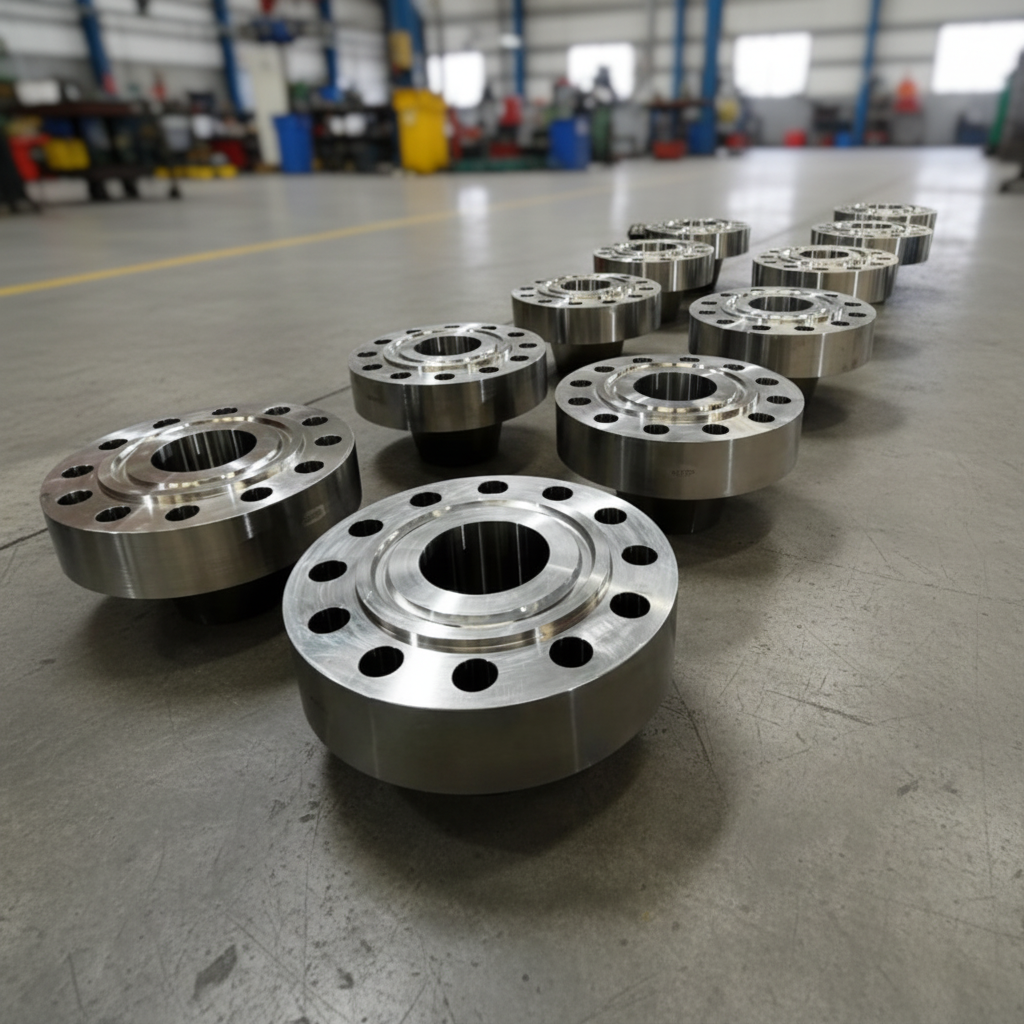
Relying on traditional visual temperature indicators is unacceptable for industrial applications. Judging 1900°F to 2100°F by a "bright yellow" heat color is subjective and highly inaccurate. Ambient lighting changes how the metal appears. Operator fatigue leads to misjudgments. You must utilize calibrated pyrometry and embedded thermocouples. Instrumental monitoring provides objective, verifiable data. It ensures the metal remains strictly within the required thermal window.
Heating rates require careful analysis and balancing. Rapid induction heating offers excellent efficiency and minimizes scaling. However, it can cause severe thermal shock in large cross-sections. The surface expands rapidly while the core remains cold, leading to internal tearing. Slow furnace heating prevents thermal shock. It allows the material to expand uniformly. You must select the heating method based on the specific alloy and the geometry of the raw billet.
Calculating accurate soaking times is a mandatory shop-floor skill. A standard framework dictates one hour of soak time per inch of cross-sectional thickness. High-alloy stainless steels often require adjustments to this rule based on furnace recovery times. You must ensure the core temperature matches the surface temperature perfectly. Inadequate soaking leaves a cold, stiff core. When the hammer strikes, the softer surface flows over the rigid center, creating internal voids and shear fractures.
Billet Diameter (Inches) | Estimated Heating Time (Hours) | Required Soak Time at Temp (Hours) | Total Furnace Time (Hours) |
|---|---|---|---|
2" to 4" | 1.0 - 2.0 | 1.0 | 2.0 - 3.0 |
5" to 8" | 2.5 - 4.0 | 2.0 | 4.5 - 6.0 |
9" to 12" | 4.5 - 6.0 | 3.0 | 7.5 - 9.0 |
13" to 16" | 6.5 - 8.0 | 4.0 | 10.5 - 12.0 |
Mitigating overheating is paramount. "Burnt" steel is a fatal metallurgical condition. It occurs when furnace temperatures push the alloy past its safe limits, causing incipient melting at the grain boundaries. The metal literally begins to liquefy internally. You will see a rough, heavily scaled surface that crumbles under the press. These parts cannot be salvaged through any heat treatment. They must be scrapped immediately to prevent catastrophic failure in service.
Stringent quality assurance protocols demand flawless thermal execution. High-stakes industries do not tolerate deviations. Every temperature fluctuation during forging impacts the final inspection results. You must build quality into the part at the furnace before the first hammer strike.
Initial forging temperatures dictate the microstructural homogeneity required to pass ASME Section III nuclear codes. These codes demand absolute perfection. The metal must possess a uniform grain structure free from any segregation. Nuclear Stainless Steel Forging Inspection relies on this homogeneity. If you forge the metal too cold, you create localized stress concentrations. These stress points compromise the structural integrity of the component under heavy radiation and pressure loads.
Improper thermal management creates inclusions or micro-fissures. These defects will trigger immediate rejections during ultrasonic testing (UT) and liquid penetrant testing (PT). UT waves scatter when they hit coarse grains or internal tears caused by poor temperature control, creating excessive noise on the inspector's screen. PT reveals surface cracks resulting from forging below the critical finishing limit. Passing these tests requires strict adherence to the established thermal parameters from the first heat to the final strike.
Precise thermal control of 17-4PH during forging directly impacts the clarity of NDT results. You must manage the initial heat and the subsequent solution annealing perfectly. If the temperature fluctuates, the alloy matrix becomes inconsistent. 17-4PH Stainless Forging NDT for Nuclear applications requires a clean, predictable microstructure. Consistent heat treatment ensures the ultrasonic waves travel through the material without unnecessary interference or attenuation.
Grain boundary anomalies caused by temperature deviations mask actual defects. They can also create false positives during phased array ultrasonic testing. A false positive forces you to scrap a perfectly good part. A masked defect allows a dangerous component to enter service. Maintaining tight thermal control eliminates these microstructural anomalies. It guarantees that the NDT equipment reads the true internal condition of the forging.
High-pressure valve bodies face extreme operational demands. Testing protocols for these components are exhaustive. They must withstand immense pressure cycles and corrosive environments. Nuclear Stainless Valve Forging Testing involves rigorous volumetric and surface examinations. The valve body must prove it can contain radioactive fluids without leaking or rupturing. The foundation of this reliability is laid during the initial heating and forging phases.
Documenting the thermal history of a valve forging is as critical as the physical NDT. You must provide verifiable proof of the temperatures used during manufacturing. This documentation ensures traceability. It proves the component was processed according to the approved engineering specifications. Long-term reliability in radioactive environments depends on this verifiable thermal history. It gives engineers the confidence that the valve will perform safely for decades.
Assessing a vendor's ability to maintain tight temperature tolerances is required for supply chain stability. You need scalability and consistency across high-volume production runs. A supplier might forge one perfect prototype. However, you must verify they can repeat that success ten thousand times. Evaluate their process controls. Look for automated temperature monitoring systems linked directly to furnace burners. Verify their standard operating procedures for handling furnace delays and equipment breakdowns. Consistent thermal management separates reliable partners from risky liabilities.
Equipment and calibration standards require strict verification. You must confirm AMS 2750 compliance for pyrometry. Request their latest furnace temperature uniformity surveys (TUS). A TUS proves the furnace heats evenly across all zones, ensuring a billet in the back corner receives the exact same heat as a billet near the door. It eliminates reliance on visual heat estimation. If a vendor cannot produce current calibration certificates, do not trust them with critical high-alloy components. Accurate equipment is the only way to guarantee metallurgical integrity.
Buyers must prioritize suppliers who possess in-house metallurgical expertise. You need a partner who integrates thermal processing with immediate, on-site testing. Destructive and non-destructive testing capabilities should be located adjacent to the forge. This allows for rapid feedback. If a temperature parameter needs adjustment, the metallurgist can identify the issue immediately by sectioning a test piece. Relying on third-party labs delays production and disconnects the testing data from the active forging process.
There is no universal temperature for stainless steel forging. Optimal parameters are strictly dictated by alloy chemistry and the mechanical demands of the end-use application. You must respect the specific thermal windows of austenitic, martensitic, ferritic, and precipitation-hardening grades. Deviating from these ranges guarantees microstructural damage and part failure. Procurement and engineering teams must filter forging suppliers rigorously based on verifiable thermal control infrastructure and their track record with stringent NDT standards.
Request comprehensive thermal processing documentation, including recent TUS reports, from all prospective vendors before awarding a contract.
Consult directly with a qualified metallurgist to define the exact forging and cooling specifications for your specific alloy grade.
Mandate that all temperature monitoring during production utilizes calibrated instrumental pyrometry rather than visual estimation.
Implement strict finishing temperature limits in your purchase orders to prevent cold-working damage on the shop floor.
A: Forging below the critical minimum temperature causes severe work hardening. The metal's flow stress increases dramatically, making it exceptionally stiff. This strains forging equipment and damages dies. Working cold stainless steel leads to internal shearing, surface tearing, and massive internal cracking that ruins the component.
A: Operators often mistake high hot-strength for a need for extreme heat. Pushing temperatures too high to soften the metal causes incipient melting at the grain boundaries. This results in "burnt" steel, which suffers irreversible grain damage and total loss of structural integrity.
A: You should never normalize martensitic stainless steels. They possess air-hardening properties. Cooling them in ambient air induces massive internal stress and causes severe thermal cracking. These grades require immediate, controlled post-forge annealing in a furnace to relieve stress safely.
A: Improper cooling through the 800°F–1500°F range causes sensitization. Chromium carbides precipitate at the grain boundaries, depleting the surrounding matrix of chromium. This drastically reduces the corrosion resistance of 304 and 316 grades, making them susceptible to intergranular attack.
A: A general baseline is one hour of soak time per inch of cross-sectional thickness. This must be adjusted based on the specific high-alloy grade and furnace recovery time. The goal is to ensure the core reaches the exact target temperature without causing surface decarburization.
A: Delta ferrite formation is primarily triggered by excessive heating. You prevent it by strictly adhering to the maximum target temperatures for the specific alloy grade and ensuring calibrated pyrometry is used to monitor the furnace, avoiding any accidental temperature spikes.


