
 English
 Views: 0 Author: Site Editor Publish Time: 2026-09-08 Origin: Site


In critical industrial applications, the structural integrity of a forged component is only as reliable as its underlying metallurgy. Engineering and procurement teams frequently face the dilemma of balancing material capabilities against performance requirements. Defaulting to 316 stainless steel often leads to unnecessary project bloat and over-speccing. Conversely, improperly deploying 304 in aggressive environments risks premature degradation, catastrophic failure, and severe operational downtime. We see this constantly in the field—valves failing prematurely because the wrong alloy was specified for the fluid chemistry. You need to match the exact metallurgical profile to the environmental stress. This requires analyzing chemical compositions, mechanical properties, and application-specific thresholds. By evaluating these factors, you can facilitate precise material specification and avoid both structural failures and wasted resources.
Compositional Delta: The primary differentiator is the addition of 2-3% molybdenum in grade 316, which exponentially increases resistance to pitting and chloride-induced corrosion compared to grade 304.
Forging Advantages: Both grades benefit significantly from the closed-die or open-die forging process, which aligns the grain flow to the component's geometry, yielding superior fatigue resistance and impact strength over cast alternatives.
Cost vs. Risk: 316 carries a notable price premium due to its alloy content. Selecting between the two requires a strict evaluation of environmental exposure (e.g., marine, chemical, high-temperature) versus budget constraints.
Application Specificity: For critical infrastructure, specifying exact forging grades—such as F316L or F304—is non-negotiable for meeting ASTM A182 compliance in high-pressure environments.
Thermal deformation physically transforms the internal structure of metal. The forging process eliminates internal voids, gas pockets, and porosity inherent in standard castings. Applying extreme mechanical pressure at elevated temperatures consolidates the material. This creates a dense, uniform microstructure that resists crack propagation.
Directional grain flow is the most significant benefit of stainless steel forging. When you machine a component from solid bar stock, the cutting tool severs the natural grain lines of the metal. This exposes end grains and creates structural weak points. The forging process forces the metal to flow into the exact shape of the die. The internal grain lines follow the external contour of the flange, fitting, or valve body. This continuous grain structure dramatically improves fatigue resistance and impact strength. Forged components exhibit superior load-bearing capabilities compared to machined bar stock or cast equivalents, making them mandatory for high-pressure piping systems.
Grade 304 represents the industry standard for austenitic stainless steel. Its baseline composition relies on a specific balance of chromium and nickel to maintain its face-centered cubic (FCC) lattice structure. This specific alloy blend provides excellent baseline corrosion resistance, high ductility, and strong forming properties.
Engineers specify 304 for environments lacking aggressive chlorides. Primary domains include general-purpose piping, sanitary food and beverage processing, water treatment facilities, and architectural applications. The material performs exceptionally well when exposed to freshwater and standard atmospheric conditions. The chromium reacts with oxygen to form a passive, self-repairing oxide layer on the surface. As long as the environment remains relatively neutral, 304 provides a highly reliable structural foundation.
Element | Grade 304 (%) | Grade 316 (%) |
|---|---|---|
Chromium (Cr) | 18.0 - 20.0 | 16.0 - 18.0 |
Nickel (Ni) | 8.0 - 10.5 | 10.0 - 14.0 |
Molybdenum (Mo) | N/A | 2.0 - 3.0 |
Carbon (C) max | 0.08 | 0.08 |
Manganese (Mn) max | 2.00 | 2.00 |
Grade 316 builds upon the austenitic foundation with a specific modification. The standard composition shifts the chromium and nickel balance, but more importantly, it introduces 2-3% molybdenum. This specific addition fundamentally alters the material's chemical resistance and mechanical behavior at elevated temperatures.
Molybdenum provides enhanced resistance to localized corrosion. It specifically combats pitting and crevice corrosion in halide and chloride environments. Grade 316 excels in marine engineering, heavy chemical processing, pulp and paper manufacturing, and demanding industrial contexts. When salt spray, seawater, or caustic chemicals are present, the molybdenum stabilizes the passive oxide layer. It prevents chloride ions from penetrating the surface and initiating galvanic corrosion cells.
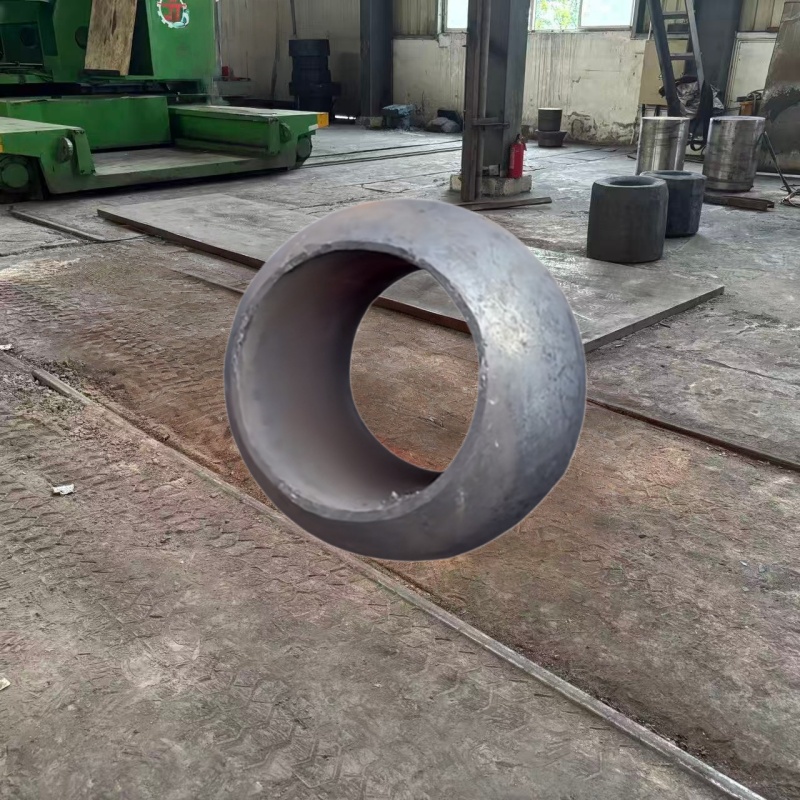
Material selection hinges entirely on environmental chemistry. Grade 304 excels in freshwater systems. It handles atmospheric moisture and mild chemical environments with zero degradation. The chromium oxide layer remains stable and self-repairing under these conditions. You can deploy 304 in municipal water systems or indoor structural supports with complete confidence.
However, 304 fails rapidly in chloride-rich environments. Chlorides attack the passive oxide layer, causing severe pitting. Once a pit forms, the localized environment inside the pit becomes highly acidic, accelerating the corrosion rate exponentially. Grade 316 solves this problem. We measure this resistance using the Pitting Resistance Equivalent Number (PREN). Grade 304 has a PREN of approximately 18. Grade 316 boasts a PREN of roughly 24. This mathematical difference translates to massive real-world performance gaps. You must specify 316 for marine environments, de-icing salt exposure, and aggressive chemical processing. It handles sulfuric, phosphoric, and acetic acids far better than 304.
Both grades offer impressive oxidation resistance. They handle intermittent service temperatures up to 1600°F (870°C). Continuous service at these temperatures requires careful evaluation. Oxidation scaling becomes a risk during prolonged exposure, potentially flaking off and contaminating the fluid stream or weakening the component.
Creep resistance separates the two grades under thermal stress. Creep is the slow, progressive deformation of a material under constant mechanical stress at elevated temperatures. Grade 316 outperforms 304 under sustained high-temperature loads. The molybdenum addition strengthens the atomic lattice, restricting dislocation movement. This makes 316 a superior choice for steam lines, exhaust manifolds, and power generation equipment operating above 1000°F.
Carbide precipitation remains a severe risk for both standard grades. Elevated temperature exposure between 800°F and 1500°F (425°C to 815°C) causes chromium carbides to form at the grain boundaries. This process, known as sensitization, depletes the surrounding areas of chromium, leading to rapid intergranular corrosion. You must specify "L" (low-carbon) grades like 304L or 316L for welded assemblies or high-heat forged components. Capping the carbon content at 0.03% prevents these carbides from forming.
Baseline mechanical strengths are remarkably similar at room temperature. Both grades offer excellent tensile and yield strength post-forging. The forging process elevates these metrics well above standard cast properties by eliminating internal micro-flaws and consolidating the metal. However, 316 offers slight structural advantages at elevated temperatures due to its higher nickel and molybdenum content.
Mechanical Property (Room Temp) | Forged 304 (Min) | Forged 316 (Min) |
|---|---|---|
Tensile Strength (MPa) | 515 | 515 |
Yield Strength 0.2% Proof (MPa) | 205 | 205 |
Elongation in 50mm (%) | 30 | 30 |
Reduction of Area (%) | 50 | 50 |
Impact toughness at cryogenic temperatures is exceptional for both alloys. Unlike carbon steel, austenitic stainless steels do not exhibit a ductile-to-brittle transition temperature. They remain tough and ductile even in liquid nitrogen or liquid natural gas (LNG) environments. The forging process further enhances this baseline toughness, making forged austenitic stainless steel the default choice for cryogenic valves and fittings.
Valve bodies operate under extreme mechanical and fluid dynamic stress. Success criteria in valve manufacturing demand absolute pressure containment. Components must maintain leak-tight integrity over decades of continuous operation. They must also resist flow-accelerated corrosion caused by high-velocity fluids, cavitation, and particulate abrasion.
Using Stainless Steel Forging for Power Valves ensures these criteria are met. The dense, forged microstructure prevents pressurized gases or liquids from permeating the valve body. It provides the necessary mechanical strength to withstand severe water hammer effects, thermal cycling, and external piping loads. Cast valves often suffer from hidden porosity that only reveals itself during hydro-testing or, worse, during live operation. Forging eliminates this variable entirely.
Grade F304 serves as the workhorse for standard energy applications. It provides exceptional structural reliability when environmental variables are tightly controlled. Ideal use cases include boiler feedwater systems, low-chloride steam lines, and general utility piping. In these environments, the fluid chemistry is actively managed to prevent corrosion.
Specifying F304 Stainless Forging for Energy Valves delivers massive resource efficiency. When environmental chlorides are strictly absent, F304 performs identically to F316 in terms of longevity and pressure containment. Procurement teams can allocate project budgets more effectively by deploying F304 in these safe zones, reserving more highly alloyed materials for the sections of the plant that actually require them.
High-risk environments demand the F316L specification. Ideal use cases include nuclear applications, high-chloride cooling water systems, offshore platforms, and sour gas (H2S) environments. These systems expose components to aggressive corrosive agents that would rapidly destroy standard 304 alloys. The molybdenum content in F316L provides the necessary chemical armor to survive decades of exposure to these harsh fluids.
The "L" (Low Carbon) designation is critical here. Specifying F316L Stainless Forging for Power Valves prevents intergranular corrosion post-welding. Valve bodies are frequently welded directly into the piping system. If standard F316 is used, the heat-affected zone near the weld will sensitize and corrode. Keeping carbon levels below 0.03% ensures the chromium remains evenly distributed, maintaining the alloy's defensive passive layer even after heavy welding.
Procurement teams must weigh technical benefits against project constraints. The following matrix provides a quick-reference evaluation of both grades to assist in material selection.
Evaluation Metric | Grade 304 / F304 | Grade 316 / F316L |
|---|---|---|
Corrosion Resistance | Excellent in freshwater and mild environments. Fails in high chlorides. | Superior resistance to pitting, crevice corrosion, and marine environments. |
High-Temperature Creep | Moderate. Suitable for standard thermal cycling. | High. Excellent sustained strength under high thermal stress. |
Machinability | Good. Lower work-hardening rate extends tool life. | Challenging. Higher work-hardening rate increases tool wear. |
Material Resource Intensity | Lower. Highly efficient for general-purpose applications. | Higher. Requires significant molybdenum and nickel extraction. |
The availability and resource intensity gap between 304 and 316 fluctuates based on global commodity markets. Because 316 requires a significant molybdenum addition and higher nickel percentages, it always demands more resources to produce. Procurement teams must monitor these supply chain variables when forecasting large-scale infrastructure projects. Specifying 316 across an entire facility when only 10% of the piping sees corrosive fluids is a massive misallocation of resources.
Evaluating initial procurement in a vacuum leads to poor engineering decisions. You must calculate the long-term lifecycle value. In harsh marine or chemical environments, 316 delivers superior long-term performance. It drastically reduces maintenance schedules, requires fewer replacements, and minimizes operational downtime. A single valve failure in a chemical plant can halt production for days; specifying 316 prevents this scenario.
Conversely, identifying scenarios where 304 offers superior lifecycle value is equally important. If a system handles treated, demineralized water indoors, 316 provides zero additional benefit. In these cases, 304 protects project margins without sacrificing structural integrity. Engineering teams must match the alloy to the exact fluid chemistry.
Many engineering departments default to 316 simply to avoid doing the math on fluid chemistry. This common industry habit drains project resources unnecessarily. Over-speccing provides a false sense of security while inflating material requirements.
Teams must implement a strict framework for material selection. Follow these steps to determine if 304 is sufficient:
Analyze the fluid chemistry for chloride parts per million (PPM).
Determine the peak operating temperature and pressure.
Evaluate the external environment (e.g., indoor climate-controlled vs. coastal outdoor).
Assess the cleaning protocols (e.g., will caustic washdown chemicals be used?).
If chlorides are absent, temperatures remain within standard operational limits, and the external environment is benign, 304 is structurally and chemically sufficient. Reserve 316 exclusively for environments that demand molybdenum.
Austenitic stainless steels are notoriously difficult to machine. They exhibit high work-hardening rates. As the cutting tool strikes the metal, the surface physically hardens. Grade 316 work-hardens significantly faster than 304 due to its specific alloy composition. If a tool dwells or rubs against the surface without cutting, it creates a hardened glaze that will destroy the next insert.
This impacts CNC machining realities. The increased toughness of 316 accelerates tool wear. It extends cycle times compared to 304, adding hidden manufacturing time. Machine shops must adjust their parameters accordingly to maintain tolerances and surface finish.
Tooling considerations are strict. Follow these CNC best practices when machining forged 316:
Maintain continuous, heavy feed rates to get under the work-hardened layer.
Utilize high-pressure, through-tool coolant to manage extreme heat generation at the cutting edge.
Select carbide inserts with positive rake angles and sharp cutting edges.
Ensure maximum rigidity in the workholding setup to prevent chatter and vibration.
Never allow the tool to dwell in the cut.
The forging process introduces severe mechanical stress into the material. Post-forging heat treatment is non-negotiable. Solution annealing is the standard procedure for both 304 and 316 to ensure metallurgical stability.
The forged components are heated to approximately 1900°F (1040°C) and held at that temperature until the entire cross-section is uniformly heated. They are then rapidly quenched in water. This process dissolves any precipitated chromium carbides back into the solid solution. It restores maximum corrosion resistance, relieves internal forging stresses, and optimizes the austenitic grain structure. Proper solution annealing guarantees the material performs to its theoretical limits in the field.
Critical infrastructure requires strict adherence to international standards. Navigating ASTM A182/A182M standards is mandatory for forged or rolled alloy and stainless steel pipe flanges, forged fittings, and valves. This specification dictates exact chemical compositions, heat treatment protocols, and mechanical property minimums. You cannot simply forge a piece of metal and install it; it must carry full material test reports (MTRs) proving compliance.
Non-Destructive Testing (NDT) verifies the integrity of the final forged component. We rely on specific NDT procedures to guarantee safety:
Ultrasonic Testing (UT): High-frequency sound waves scan the internal volume of the forging for hidden voids, inclusions, or internal cracks.
Liquid Penetrant Testing (PT): The surface is cleaned, and a highly visible dye is applied. After a set dwell time, excess dye is removed, and a developer is sprayed on. This draws out any penetrant trapped in microscopic surface cracks, revealing flaws invisible to the naked eye.
Positive Material Identification (PMI): Handheld X-ray fluorescence (XRF) scanners verify the exact chemical composition of the finished part, ensuring a 304 forging wasn't accidentally mixed with a 316 batch.
Audit your system's fluid chemistry to identify exact chloride concentrations and peak operating temperatures before selecting an alloy.
Map the external environmental risks across your piping network, specifically looking for coastal salt spray or aggressive washdown chemicals.
Specify "L" grade alloys (304L or 316L) for any forged components requiring post-forging welding to prevent intergranular corrosion.
Mandate ultrasonic and liquid penetrant testing for all high-pressure valve bodies to guarantee internal and surface integrity.
Engage with a certified metallurgical engineer or an experienced forging partner to finalize material specifications based on your exact operational data.
A: The primary difference is chemical composition. Grade 316 contains an addition of 2-3% molybdenum. This specific alloy addition drastically improves resistance to chloride-induced pitting and crevice corrosion compared to 304. Grade 304 lacks molybdenum and relies solely on chromium and nickel for baseline corrosion resistance.
A: No. Their base mechanical strengths at room temperature are very similar. The superiority of 316 lies in its chemical resistance and high-temperature creep resistance, not its baseline tensile strength. However, the forging process significantly improves the mechanical properties of both grades compared to standard castings.
A: No. Grade 304 degrades rapidly in marine environments. The high concentration of airborne chlorides and salt spray attacks the material's passive oxide layer. This causes severe pitting and eventual structural failure. You must specify grade 316 for any marine or coastal applications.
A: The "L" stands for low carbon (maximum 0.03%). Lowering the carbon content prevents carbide precipitation during welding or high-heat exposure. This stops chromium from depleting at the grain boundaries, thereby preventing intergranular corrosion and maintaining the component's structural integrity.
A: Forging primarily improves mechanical strength and fatigue resistance by eliminating internal voids and aligning grain flow. However, by creating a denser, less porous surface than casting, forging can marginally improve the uniformity of the passive oxide layer, aiding overall corrosion resistance.
A: Grade 304 is generally easier to machine. Grade 316 has a higher work-hardening rate and increased toughness due to its alloy composition. Machining 316 requires slower cutting speeds, heavier feeds, more rigid tooling setups, and optimized coolant delivery to prevent rapid tool wear.


