
 English
 Views: 0 Author: Site Editor Publish Time: 2026-08-25 Origin: Site


The structural integrity and lifecycle cost of high-stress industrial components hinge directly on the chosen forging methodology. Engineering and procurement teams must balance prohibitive upfront tooling costs against per-unit production savings. They must ensure the chosen method meets strict metallurgical and dimensional tolerances for stainless steel components. Selecting the wrong process leads to excessive machining waste, premature tool failure, or compromised mechanical properties in the field.
This guide provides an evidence-based framework for evaluating open die versus closed die processes. We analyze mechanical outcomes, tooling amortization, and critical post-forging heat treatments to drive an optimal sourcing decision. You will learn how to match part geometry, volume requirements, and mechanical specifications to the correct forging technique. We detail the physical mechanics of metal deformation and the subsequent thermal processing required to lock in performance.
Volume Dictates Method: Closed die forging requires high upfront tooling investment but yields lower per-unit costs at high volumes, whereas open die forging is cost-effective for low-volume, custom, or oversized runs.
Dimensional Precision: Closed die processes utilize high-pressure molds to achieve near-net shapes with tighter tolerances, significantly reducing secondary machining requirements compared to open die forging.
Size and Weight Constraints: Open die forging shapes metal in open space, making it practically limitless in component size (ideal for massive shafts and rings), while closed die forging is restricted by the physical capacity of the press and die cavity.
Metallurgical Integrity: Both methods improve grain structure over casting, but closed die forging offers superior, highly controlled directional grain flow that contours precisely to the component's geometry.
Open die forging involves deforming heated stainless steel billets between flat or simply contoured dies. These dies do not completely enclose the material during the deformation process. The metal expands laterally as the press applies compressive force. Operators utilize massive hydraulic presses or pneumatic hammers to strike the metal. The workpiece rests against a stationary anvil in open space. This allows for continuous visual inspection and measurement during the forging cycle. The raw ingot leaves the furnace at temperatures exceeding 2000°F, requiring immediate and precise handling.
Operator dependency defines the open die process. Highly skilled personnel must continuously manipulate the workpiece. They use heavy-duty manipulators and overhead cranes to rotate and position the glowing steel. The operator controls the reduction ratio through successive strikes. This continuous manipulation breaks down the cast dendritic structure of the raw ingot. It consolidates internal voids and creates a dense, uniform wrought structure. A minimum reduction ratio of 3:1 is standard practice to ensure centerline consolidation in heavy sections.
Typical outputs from open die forging include simpler, massive parts. We commonly forge pins, bars, spindles, blanks, large rings, and heavy shafts. Basic structural shapes for heavy industry rely entirely on this method. The process excels when producing components that exceed the physical size limits of enclosed dies. You can forge custom shapes without investing in dedicated tooling, making it ideal for prototype development, emergency repair parts, and low-volume production runs where die sinking is economically unfeasible.
Closed die forging compresses heated metal within fully enclosed, custom-machined die cavities. The equipment applies extreme pressure to force the plasticized steel into every detail of the mold. The die cavity controls the final shape precisely. This process requires multiple stages. Operators move the workpiece through a series of cavities cut into the same die block. These stages typically include fullering, edging, blocking, and final finishing. Each stage moves the metal closer to its final geometry while managing the volume of material to prevent die overloading.
Flash plays a critical role in closed die mechanics. Flash is the excess metal that squeezes out between the two die halves into a specially designed gutter. As this thin layer of flash contacts the cooler die surface, it cools rapidly. This rapid cooling increases the friction and flow resistance at the parting line. The restricted flow spikes the internal pressure within the die cavity. This immense pressure forces the remaining hot metal to fill the deepest, most intricate recesses of the mold before the flash completely freezes.
Typical outputs include complex, asymmetrical parts requiring high precision. Aerospace structural fittings, high-pressure valve bodies, and automotive connecting rods utilize this method. The process delivers exceptional repeatability across large production runs. You achieve a near-net shape that requires minimal secondary operations. The initial tooling investment is substantial, requiring premium H13 or FX tool steels and extensive CNC milling, but the per-part efficiency is unmatched for complex geometries produced in high volumes.
Closed die forging achieves near-net shapes with exceptional dimensional accuracy. This capability significantly reduces cycle times in downstream manufacturing. Operators spend less time on secondary CNC machining. The tight tolerances achieved straight off the press minimize material waste. You only need to machine critical mating surfaces, cut threads, or drill specific hole patterns. The reduced machining envelope translates directly to faster time-to-market and lower labor costs per unit. Standard closed die tolerances often hold within 0.030 to 0.060 inches depending on the part size.
Open die forging requires a much larger machining allowance. The process cannot produce intricate details, sharp internal radii, or complex draft angles. You must account for substantial material waste when calculating raw material requirements. Engineers typically add a generous envelope around the final part dimensions. This ensures the machine shop can clean up the rough forged surface, remove any surface decarburization, and achieve the final geometry.
To accurately calculate the required machining allowance for an open die forging, engineering teams follow a strict sequence of evaluations:
Determine the final finished dimensions of the component based on the engineering drawing.
Add a standard radial allowance (typically 0.500 to 1.000 inches) to account for surface scale and rough forging tolerances.
Calculate the required draft angles and corner radii necessary for the open die tooling to release the part without tearing the surface.
Factor in thermal contraction rates for the specific stainless steel grade as it cools from forging temperature to room temperature.
Add extra material length for test prolongations, which will be cut off later for destructive mechanical testing.
Feature | Open Die Forging | Closed Die Forging |
|---|---|---|
Tooling Investment | Low to None (Standard Flat Dies) | High (Custom Machined Impression Dies) |
Target Production Volume | Low Volume / Custom / Prototypes | High Volume / Mass Production |
Component Size Limits | Practically Limitless (Often >10,000 lbs) | Strictly Limited by Press Tonnage Capacity |
Secondary Machining Required | Extensive (Produces a Rough Shape) | Minimal (Produces a Near-Net Shape) |
Internal Grain Flow | Longitudinal / Unidirectional | Contoured to Complex Part Geometry |
Lead Time to First Part | Short (Days to Weeks) | Long (Weeks to Months for Die Sinking) |
Break-even analysis determines the economic viability of your chosen method. High tooling costs for closed die processes require large production runs to justify the investment. You must pay for specialized tool steel blocks, the extensive CNC milling required to sink the impressions, and the electrical discharge machining (EDM) for deep pockets. We typically see break-even points between 500 and 1,000 units, depending on part complexity and material weight. Once you cross this threshold, the low per-part cost dominates the financial model, making closed die highly profitable.
Material flow stress complicates tooling amortization. Stainless steel exhibits high flow stress at elevated temperatures compared to softer metals like carbon steel or aluminum. This high resistance to deformation accelerates die wear. Rapid die wear forces more frequent die refurbishment, welding repair, or complete replacement. You must factor this accelerated wear into your long-term cost projections. Proper die lubrication using graphite-based synthetic compounds and strict temperature control become critical variables in maintaining production efficiency.
Lead time considerations also drive the sourcing decision. Closed die forging requires extensive design, finite element analysis (FEA) simulation, and manufacturing time before the first part is struck. This lead time can stretch into months. Open die forging allows for rapid production initiation. If you have the raw billet in stock, you can begin heating and forging immediately. This makes open die the only viable option for emergency replacement parts during plant shutdowns or rapid prototyping phases.
Closed die forging requires massive press tonnage to move high-strength alloys. The force required to fill a complex cavity with stainless steel is immense, often requiring 10 to 20 tons of force per square inch of projected area. This physical requirement strictly limits the maximum size of closed die parts. Only a few facilities globally possess the 50,000-ton presses required for massive closed die components. You must match your part design to the physical capabilities of available forging equipment, often restricting closed die parts to under 500 lbs.
Open die forging offers massive scalability. You can forge components exceeding 10,000 lbs with relative ease. The open space removes the physical constraints of an enclosed die. We regularly forge massive turbine shafts, pressure vessel rings, and heavy industrial rolls using this method. The size is limited only by the capacity of the overhead cranes, the size of the rotary hearth furnaces, and the maximum daylight opening of the hydraulic press.
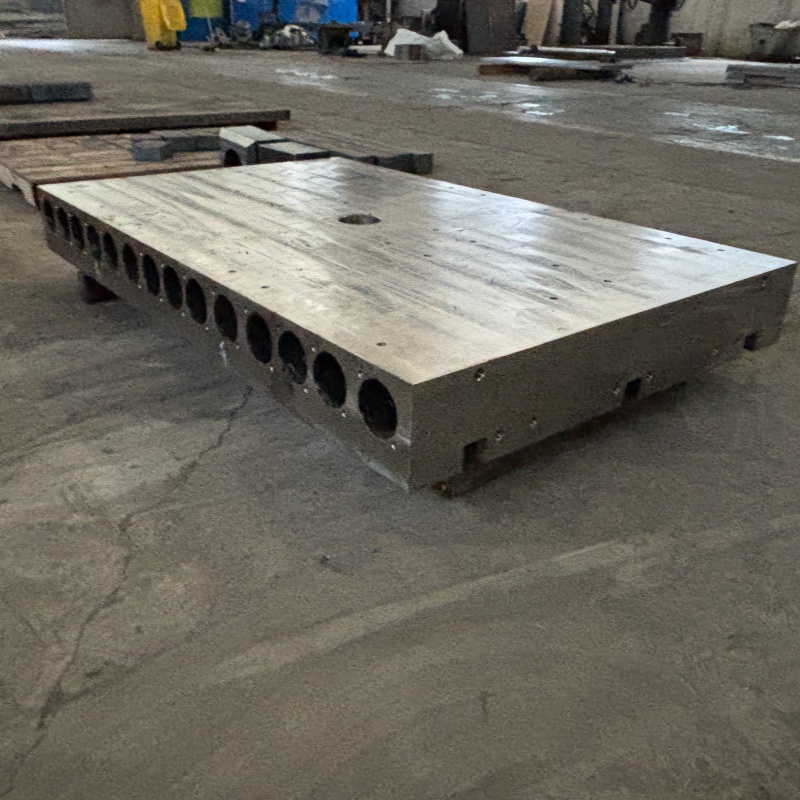
Open die forging aligns the internal grain structure longitudinally. As the press elongates the billet, the grains stretch in the direction of the metal flow. This unidirectional grain flow suits heavy-duty applications like drive shafts and pump spindles perfectly. The component exhibits maximum tensile strength and impact resistance along its primary axis. You achieve superior mechanical properties compared to cast alternatives, which suffer from random, isotropic grain structures and inherent internal porosity.
Closed die forging forces the grain flow to follow complex component contours. The metal bends and flows into the intricate recesses of the die cavity. The internal grain structure mirrors this external geometry. This contoured grain flow maximizes fatigue resistance and impact strength at critical stress points, such as flanges or intersecting webs. Engineers rely on this phenomenon when designing aerospace bulkheads and high-pressure fittings. The continuous, unbroken grain lines prevent crack propagation under cyclical loading.
Both methods require careful control to prevent internal voids and porosity. We evaluate these risks based on the reduction ratio achieved during forging. A higher reduction ratio ensures complete consolidation of the center of the billet, crushing the cast dendrites. Proper heating cycles and controlled deformation rates eliminate these defects. We utilize advanced ultrasonic testing (UT) to verify the internal soundness of the finished forging, ensuring no center bursts or unhealed porosity remain.
Post-forging thermal processing is mandatory to relieve internal stresses. The extreme plastic deformation induced during forging leaves the metal in a highly stressed state. Without thermal intervention, the component may warp during subsequent machining or fail prematurely in service due to stress corrosion cracking. We utilize Metallurgical Stainless Steel Forging Heat Treatment to restore the optimal material properties. This process recrystallizes the grain structure and normalizes the internal stresses generated by the hammer blows.
Heat treatment directly impacts the corrosion resistance of the final part. It enhances the mechanical properties of austenitic, martensitic, and duplex grades. Operators must control cooling rates strictly. Precise cooling prevents the precipitation of chromium carbides at the grain boundaries. If carbides precipitate, the surrounding areas become depleted of chromium, leading to intergranular corrosion. Strict adherence to time-temperature-transformation curves ensures the metal retains its defensive passive oxide layer.
Grade 310S demands specific processing to maintain its high-temperature oxidation resistance. This highly alloyed austenitic grade contains elevated levels of chromium and nickel, designed specifically for furnace components and heat exchangers. We address its unique metallurgical needs through specialized thermal cycles. 310S Stainless Forging Solution Treatment Metallurgy requires heating the material above 1050°C (1920°F) to dissolve any precipitated carbides fully into the solid solution.
Rapid quenching follows the high-temperature soak. We must drop the temperature of the forging past the critical sensitization range (425°C to 815°C) as quickly as possible. This rapid water quench locks the carbon in solution and maintains a fully austenitic structure. It prevents sigma phase embrittlement and ensures the component can withstand continuous service in high-temperature furnace applications. Slow cooling in air would ruin the corrosion resistance entirely and render the part brittle.
We evaluate dimensional stability carefully during these extreme thermal cycles. High-temperature solution annealing and subsequent water quenching induce massive thermal shocks. These shocks can cause severe warping in complex or thin-walled forgings. Proper fixturing, bracing, and controlled immersion techniques mitigate this risk. We design the quenching process to ensure uniform cooling across the entire geometry of the part, agitating the quench bath to break up vapor jackets.
Heavy-duty rolling machinery components endure continuous cyclical loading and extreme contact pressures. They require exceptional toughness to survive in steel mills, paper processing plants, and mining operations. We implement Stainless Forging Annealing for Rolling Machinery to maximize ductility before final machining. The forging process leaves martensitic and precipitation-hardening grades too hard and stressed for precise CNC turning and milling operations.
Full annealing cycles improve machinability significantly. We heat the forged rolls to a specific sub-critical temperature, hold them to ensure uniform heat penetration across the massive cross-section, and then cool them very slowly inside the furnace. This process softens the steel, refines the coarse grain structure generated during high-temperature forging, and improves the surface finish achievable during final machining. It reduces tool wear on the lathe and ensures dimensional accuracy.
We balance hardness requirements with the absolute need for toughness. Heavy industrial applications demand this precise metallurgical balance. If the roll is too hard, it becomes brittle and may shatter under shock loads when a cold billet enters the mill. If it is too soft, it will wear prematurely, lose its profile, and require frequent replacement. The precise annealing cycle dictates this balance, preparing the forged blank for its final hardening and tempering treatments.
You must factor in raw material costs and tooling investment when selecting a forging method. Machining time and expected component lifespan drive the final calculation. Open die forging uses more raw material but requires zero tooling investment. Closed die uses material efficiently but demands expensive custom dies. You must calculate the exact intersection point where material savings and reduced machining hours outweigh the upfront tooling costs.
We evaluate the cost of quality rigorously. Scrap rates, non-destructive testing (NDT) requirements, and rework impact the project budget heavily. Closed die forging generally produces lower scrap rates once the process is dialed in and the dies are proven. Open die forging requires more manual inspection and carries a higher risk of dimensional deviation. A comprehensive stainless steel forging project requires strict budget controls and accurate forecasting of these secondary machining and testing costs.
Closed die forging faces the constant risk of premature die wear. The high flow stress of stainless steel causes severe friction at the die-workpiece interface. We mitigate this through proper die lubrication using advanced graphite or synthetic compounds applied between every strike. Selecting robust die materials, such as premium H13 tool steel, and controlling forging temperatures extends tool life. Preheating the dies prevents thermal shock and catastrophic cracking during the first few strikes of a production run.
Large open die forgings risk inconsistent mechanical properties. The center of a massive billet may not receive sufficient deformation if the press lacks adequate tonnage. We enforce strict adherence to reduction ratios to ensure full center consolidation. Operators must follow precise forging schedules, reheating the billet if it drops below the minimum forging temperature. Advanced ultrasonic testing protocols verify internal soundness, scanning for any remaining voids or unhealed porosity deep within the metal.
Aerospace applications demand strict AS9100 compliance. Precision closed-die components require rigorous documentation, material traceability, and process control. Every parameter, from furnace temperature to press tonnage, must be recorded and verified. The Oil & Gas sector follows API 6A standards for large open-die forgings. These standards mandate full traceability, heat lot tracking, and extensive mechanical testing to ensure safety in high-pressure, corrosive environments.
Process validation ensures safety in critical environments. You cannot simply forge a part and hope it meets specifications. We conduct first article inspections (FAI) to validate the die design and the thermal processing parameters. Destructive testing on sample prolongations verifies tensile strength, yield strength, elongation, and impact toughness. Only after full validation and customer sign-off does full-scale production commence.
Compile a comprehensive RFQ including detailed 3D CAD models and 2D manufacturing drawings.
Define exact material grade specifications, including any required regional equivalents or proprietary chemistries.
Specify exact production volumes to allow the forging partner to calculate accurate tooling amortization.
Detail all required post-forging heat treatment standards and non-destructive testing requirements.
Engage with certified forging partners early in the design phase for technical feasibility and design-for-manufacturability reviews.
A: Open die forging shapes metal in open space between flat dies or an anvil, making it ideal for large or simple parts. Closed die forging uses custom molds under high pressure to completely enclose the metal, producing complex, precise shapes with near-net dimensions.
A: While highly dependent on part size and complexity, closed die forging typically becomes economically viable at volumes exceeding 500 to 1,000 units. At this volume, the high initial tooling costs can be sufficiently amortized across the production run.
A: Both methods improve strength over casting by eliminating internal voids. However, closed die forging generally provides superior fatigue resistance because the internal grain flow is forced to contour exactly to the complex shape of the finished part.
A: Heat treatment is critical to relieve residual stresses induced by the extreme plastic deformation of the forging process. It restores optimal grain structure and ensures the stainless steel retains its required corrosion resistance and mechanical properties.
A: Grade 310S requires specific high-temperature solution annealing above 1050°C followed by rapid water quenching. This process dissolves precipitated carbides and maintains a fully austenitic structure, ensuring exceptional high-temperature oxidation resistance.
A: Annealing softens the forged stainless steel, significantly improving its machinability for precise finishing operations. It also enhances the ductility and toughness required to withstand the heavy, continuous shock loads experienced by rolling machinery.
A: Open die forging requires significantly more secondary machining to achieve final dimensions because it only produces a rough shape. Closed die forging produces a near-net shape with tight tolerances controlled precisely by the die cavity.


